


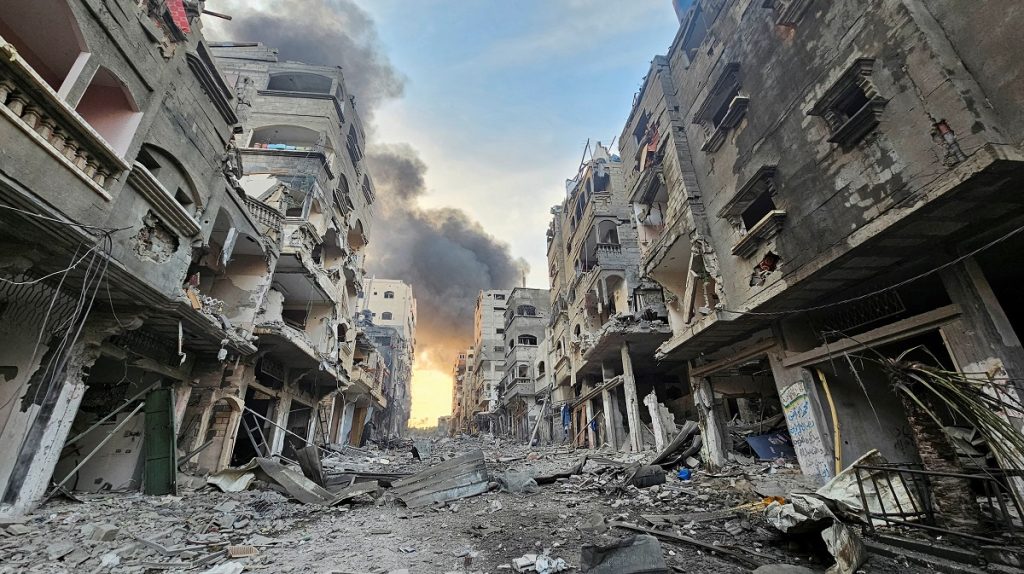
This is amid reports of renewed fighting between Israeli forces and Hamas that could derail the fragile ceasefire.
Speaking at a press briefing on Tuesday, United Nations (UN) Spokesperson Stéphane Dujarric described reports of Israeli military action as “extremely concerning,” stressing that “we don’t want civilians to be bombed again” or humanitarian operations “derailed again.”
Hamas denied involvement in an earlier attack on Israeli forces by Palestinian militants, maintaining its commitment to the ceasefire while accusing Israel of violating its terms.
The UN Office for the Co-ordination of Humanitarian Affairs (OCHA) said partners are scaling up efforts under a 60-day response plan to deliver aid across the enclave.
“UN partners providing water and sanitation report that water distribution is expanding in northern Gaza, where they are now able to deliver 4 600 cubic metres daily in 585 different locations,” Dujarric said.
Preparations for the rainy season are underway in Deir al Balah, Khan Younis and Gaza governorates, including clearing stormwater drainage systems.
Between October 1 and October 25, nutrition programmes treated over 4 300 acutely malnourished pregnant and breastfeeding women, while preventive support reached more than 134 000 mothers and children under five.
Since the start of the ceasefire, more than 480 000 movements from southern to northern Gaza have been recorded, alongside nearly 100 500 movements from western to eastern Khan Younis.
To shield displaced communities from the cold and rain, aid workers are helping families repurpose flour and rice bags into sandbags to reinforce shelters.
Humanitarian agencies continue efforts to retrieve cargo from Gaza’s crossings, but aid deliveries have been delayed following Israeli authorities’ decision to reroute humanitarian and commercial trucks.
“In response to the rerouting, several agencies have temporarily reduced the number of trucks in their convoys pending an assessment of the road conditions,” Dujarric said, adding that heavy traffic and congestion along the new route have further slowed aid movements.
Meanwhile, the UN human rights office cited data from Israeli NGO Peace Now showing that settler activity has intensified, with 84 new outposts established over the past year compared to 49 the previous year, and 757 settler attacks recorded in the first half of 2025.
–UN/ChannelAfrica–


