


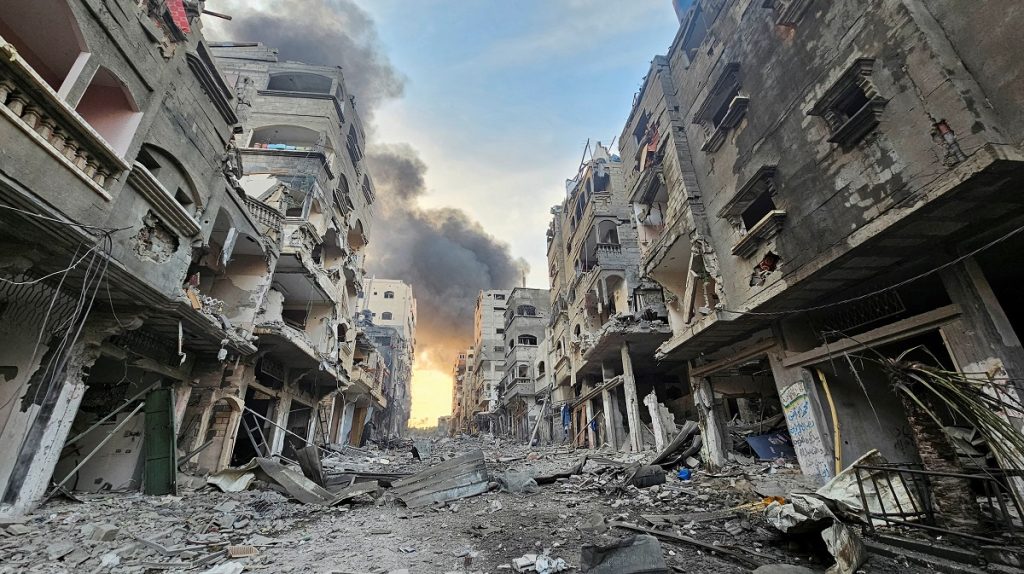
It aims to reach 44 000 children who have been cut off from essential health services due to the ongoing conflict.
According to the United Nations (UN) Office for the Co-ordination of Humanitarian Affairs, one in five children under the age of three has missed routine vaccinations since the war began, putting them at risk of preventable diseases such as measles, polio, and pneumonia.
The catch-up campaign, running from November 9 to 18, will vaccinate children against 11 life-threatening illnesses, including measles, diphtheria, tetanus, hepatitis B and tuberculosis. It will be led jointly by the UN Children’s Fund, the UN Palestine Refugee Agency, the World Health Organisation (WHO) and Gaza’s Ministry of Health.
UNICEF’s Special Representative in the State of Palestine, Jonathan Veitch, said the operation marked a crucial step toward restoring children’s right to health after two years of relentless conflict.
“Vaccinating every child and supporting their nutrition is not just humanitarian work; it is a moral imperative,” Veitch said. “This is how we begin to rebuild hope amid devastation.”
More than 450 health workers and 149 doctors have been trained for the campaign, which will roll out in three stages, with follow-up rounds in December and January.
Before the war, Gaza’s vaccination coverage was among the world’s highest at 98%. Today, less than 70% of children are covered, and only 23 of the enclave’s 54 immunisation facilities remain functional.
WHO Representative Dr Richard Peeperkorn described the campaign as “a lifeline” but warned that rebuilding Gaza’s shattered health system would require sustained support.
Meanwhile, UN agencies continue to scale up humanitarian aid, serving over 1.2 million meals daily through community kitchens and distributing hygiene kits, blankets, tents, and fuel to displaced families.
Despite bureaucratic and security challenges, over 180 truckloads of supplies, including 1 500 tonnes of food, were offloaded at Gaza’s border crossings on Monday.
“The UN and partners are doing all they can,” said UN Deputy Spokesperson Farhan Haq, “but far more is needed to ensure no one is left behind.”
–UN/ChannelAfrica–


