

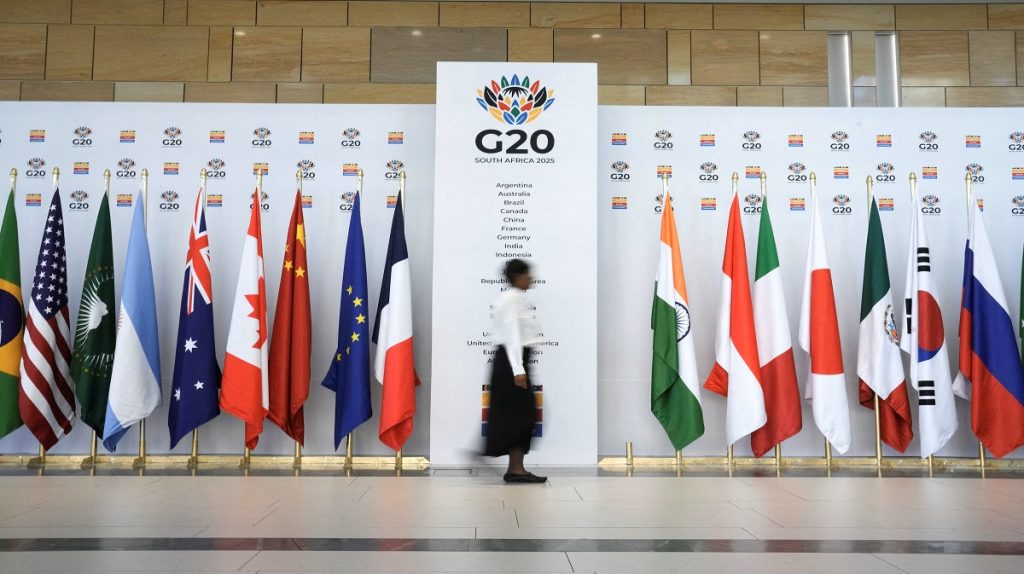
However, Georgieva warned that stubbornly low growth, high debt and rising uncertainty continue to hold back many countries, especially the poorest. She delivered the remarks at the G20 Leaders’ Summit in Johannesburg, South Africa (SA), the first time the gathering has ever taken place on African soil.
Georgieva thanked President Cyril Ramaphosa and the SA government for hosting the summit, and commended Finance Minister Enoch Godongwana and Reserve Bank Governor Lesetja Kganyago for steering “constructive” discussions on global economic challenges. A recurring theme, she said, was the importance of building resilience.
“My headline message today is very straightforward. The global economy is doing better than we feared, but worse than we need,” she told leaders.
She said resilience has been driven by a strong private sector and years of strengthened policies and institutions, including cooperation within the G20. But global growth remains below pre-pandemic levels, while debt is “exceptionally high”, leaving many developing and low-income countries unable to invest in essential services and climate resilience.
Georgieva urged governments to reinforce confidence through credible and predictable policies, restore buffers, and tackle domestic imbalances that feed broader global vulnerabilities. Structural reforms will also be essential to unlock private-sector potential, she said.
Turning to global co-operation, she emphasised the need to modernise trade rules for the digital economy and mobilise new financing for countries in need. She confirmed that the IMF is expanding its permanent quota resources by 50%, a decision supported by G20 members.
On debt, she called for more decisive action. Although progress has been made under the G20 Common Framework, she said countries still need faster and more predictable restructuring processes. She praised SA’s leadership in securing the October Declaration on Debt, describing it as a “clear road map for the future”.
Georgieva also highlighted the rapid advance of artificial intelligence, saying it could boost global growth by nearly 1%. But she warned that artificial intelligence (AI)’s impact will be uneven, with up to 60% of jobs in advanced economies potentially affected. She called for urgent investment in digital infrastructure, skills, flexible labour markets and ethical regulation.
Ensuring developing countries are not left behind will be key, she said. “This is essential to ensure that AI is a force of prosperity for all.”
–IMF/ChannelAfrica–


