

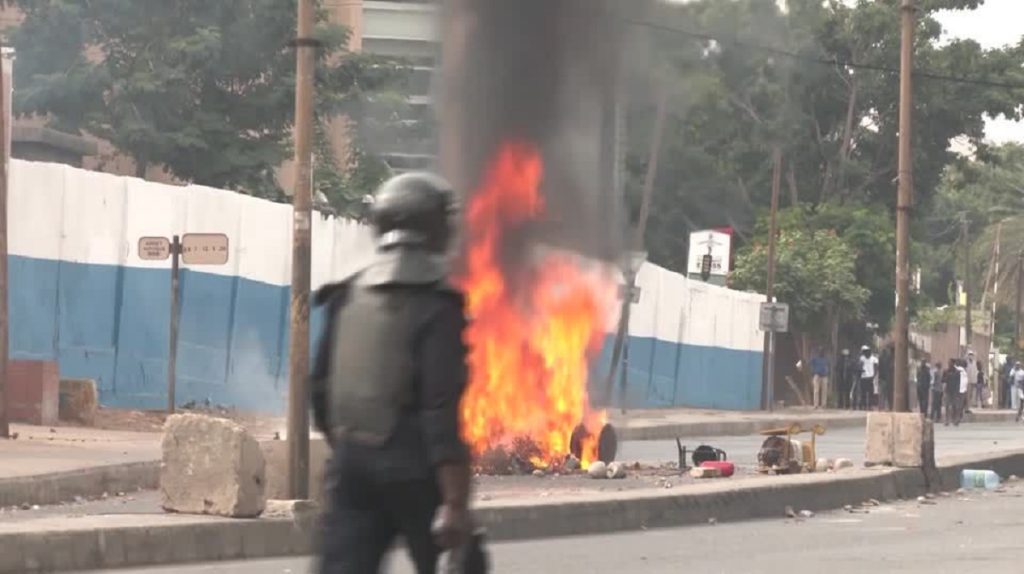
The confrontation followed a request by university authorities for law enforcement support, after students threw stones and police responded with tear gas.
Students insist they had gathered to engage in discussions on campus when police entered the premises. Their frustrations centre on delayed stipends and broader financial pressures that have plagued the university system for more than two decades.
Speaking to Channel Africa on Thursday, Professor Ousmane Sène, former lecturer at the University and Director of the West African Research Centre, said the crisis cannot be separated from the sheer scale of enrolments and chronic underfunding.
He noted that Cheikh Anta Diop University alone hosts around 80 000 students, with the number rising each year. “Most students come from outside Dakar. Housing is a problem, food is a problem. The stipend is essential for students to survive on campus and attend classes normally,” he explained.
Accommodation shortages have forced widespread overcrowding, with single rooms often shared by up to 10 students. Those unable to secure space on campus must pay rent and transport costs, making education significantly more expensive despite tuition being free.
Sène highlighted that not all students receive scholarships, and even for those who do, payments are often delayed and insufficient. Determining eligibility adds further tension, as students who repeat a year multiple times lose access to financial support.
He said the ongoing stipend crisis repeatedly disrupts the academic calendar. Exams are frequently postponed, semesters extended and opening dates uncertain. “At this present moment, nobody can tell you what the academic calendar is,” he added.
Despite repeated appeals to national leaders, including the President and Prime Minister, students argue that their concerns have not been addressed. Sène pointed out that demonstrations, even when intended to be peaceful, can quickly escalate due to infiltration by non-students, prompting police intervention.
While acknowledging the urgency of a lasting solution, he warned that the government faces significant budget constraints.
“You are talking about a huge budget for tens of thousands of students. Senegal is doing great things, but it is money-constrained, just like many governments,” he said.
He emphasised that the pattern of student strikes and disruptions has become a long-standing challenge for Senegal’s universities, one that new authorities must confront if stability on campuses is to be restored.
–ChannelAfrica–


