


According to the International Monetary Fund (IMF) 2025 Article IV Consultation, the country’s economic outlook has “deteriorated markedly”, with gross domestic product (GDP) projected to contract by 1% this year following a 3% decline in 2024.
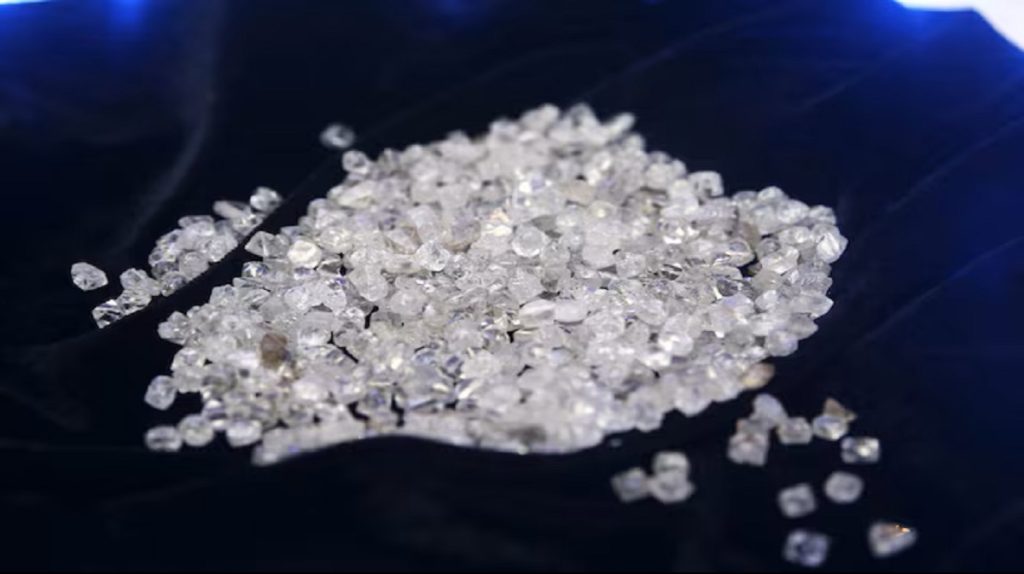
The diamond sector, historically Botswana’s economic backbone, has been hit hard by competition from lab-grown diamonds and shifting consumer preferences.
Mining output fell by 24% last year, while diamond trading slumped by 34%. Non-mineral growth remains subdued at 1.5%, and unemployment hovers near 28%, with youth joblessness at a staggering 38%.
Fiscal and external buffers have eroded significantly. The fiscal deficit widened to 7.1% of GDP in FY2024/25 and is expected to exceed 8% in FY2025/26.
International reserves dropped to $3.5 billion, about five months of import cover, and could be depleted by 2030 without decisive action. Public debt, currently at 40.7% of GDP, risks climbing to nearly 60% by the end of the decade.
In response, authorities have launched the Botswana Economic Transformation Programme and approved a new five-year National Development Plan aimed at fostering private sector-led growth. Measures include centralising procurement, tightening monetary policy, with the policy rate raised to 3.5%, and adjusting the exchange rate to preserve reserves.
The IMF has urged Botswana to adopt an ambitious fiscal consolidation plan, broaden its tax base, and streamline spending, particularly the public wage bill, which absorbs over 13% of GDP. Structural reforms to improve access to finance, enhance governance, and diversify beyond diamonds are deemed critical.
While diamond demand is expected to recover partially from 2026, risks remain high. “Without bold reforms, Botswana faces rising debt and dwindling reserves,” the IMF warned, stressing that swift action could restore stability and unlock sustainable, inclusive growth.
–IMF/ChannelAfrica–


