


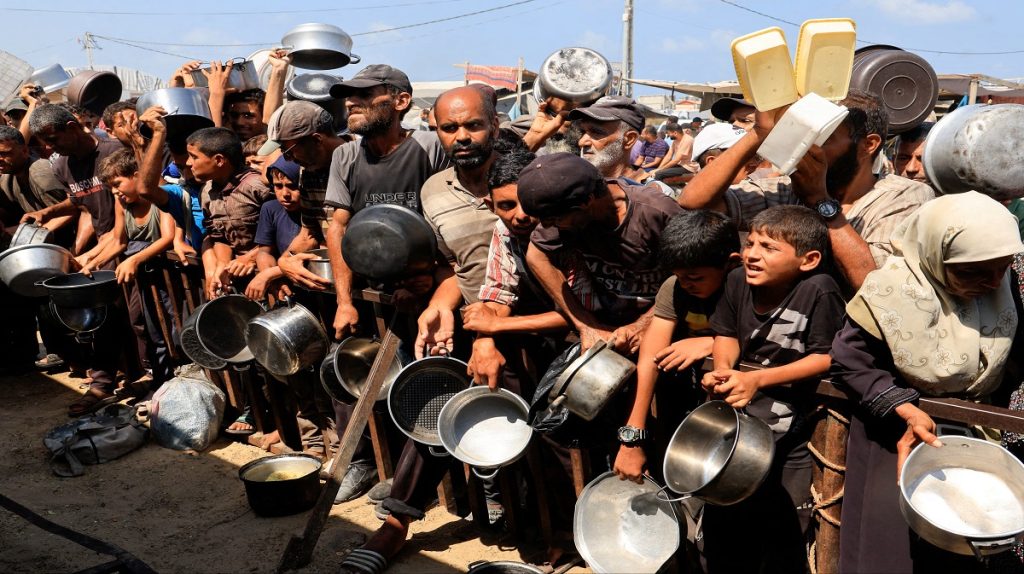
The case was highlighted on Thursday as the WFP provided an update on conditions in Gaza, nearly two months into a fragile ceasefire. While access to food has improved, humanitarian agencies warn that the overall living situation for civilians remains extremely harsh.
The WFP’s Representative for Palestine, Antoine Renard, told journalists that the agency has so far reached more than one million people with food boxes and wheat flour. Working alongside the UN Children’s Fund, the WFP is also providing preventive nutrition support to more than 300 000 people to help prevent malnutrition and assist those already affected to recover.
Support has also extended to education, with temporary learning spaces receiving around 190 000 nutrition kits, including high-energy biscuits and fortified protein bars for children.
According to the WFP, most people in Gaza are now managing to eat an average of two meals per day, an improvement from July when many survived on just one meal daily. Further data on nutrition conditions is expected with the release of a new Integrated Food Security Phase Classification report.
Despite these gains, humanitarian officials stress that food alone is not enough. Living conditions across Gaza remain extremely difficult, particularly during the winter period, with rain and humidity worsening the situation for families sheltering in tents. Many households are still forced to burn trash or wood to cook their meals.
Access constraints also continue to hamper relief efforts. The WFP is seeking to expand operations into northern areas such as Jabalia and Beit Lahia, where Israeli forces remain present. A new food distribution point was opened in Beit Lahia last week, marking a limited but important step forward.
The update follows a joint UN statement urging the international community to pressure Israel to remove obstacles to humanitarian aid. UN officials have warned that new measures affecting international non-governmental organisations could further undermine relief operations and risk the collapse of the humanitarian response.
Aid agencies insist that without sustained access, improved living conditions and unimpeded humanitarian operations, the humanitarian crisis in Gaza will continue to threaten the lives of the most vulnerable, particularly women and children.
–UN/ChannelAfrica–


