


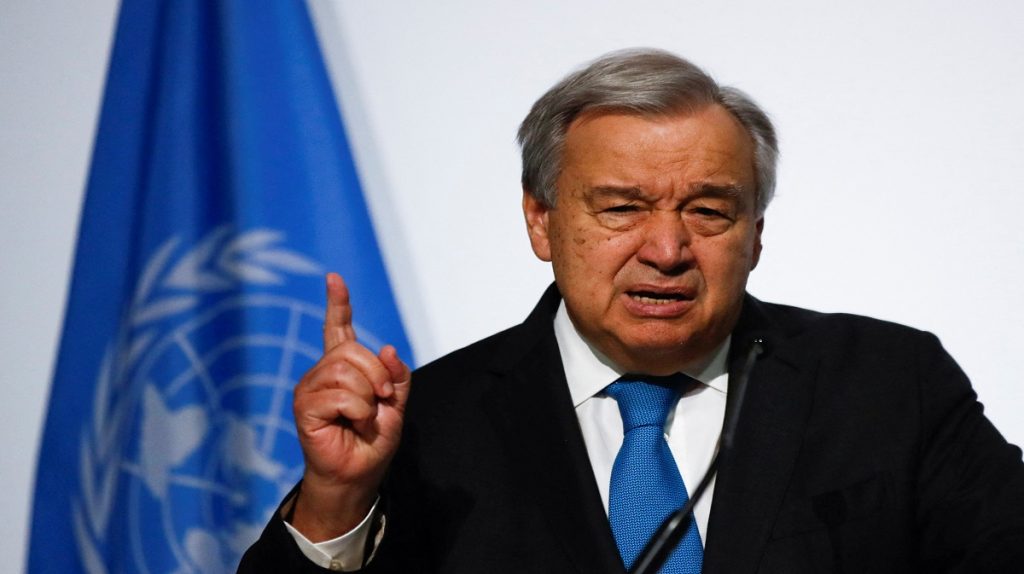
Addressing more than 1 000 delegates at Methodist Central Hall, the venue where the first UN General Assembly met on January 10, 1946, Guterres said humanity remains strongest when it stands together. He called on today’s leaders to be “bold enough to change” and to show the courage displayed by the founders of the UN after the devastation of the Second World War.
The anniversary event, organised by the UN Association-UK, brought together figures including General Assembly President Annalena Baerbock, scientist Professor Brian Cox and UN Refugee Agency Goodwill Ambassador Maya Ghazal. It also marked the 80th anniversary of the first UN Security Council meeting held nearby on January 17, 1946.
Reflecting on the history of the hall, Guterres reminded the audience that the original delegates had walked through a London scarred by bombing. During the Blitz, up to 2 000 civilians sheltered in the building’s basement. “In many ways this Hall represents what the United Nations is: a place people put their faith in for peace, for security and for a better life,” he said.
Since 1946, the UN has grown from 51 to 193 members. Guterres described the General Assembly as the parliament of nations, a forum where every voice can be heard even when debates are difficult. Yet he acknowledged that the world of 2026 bears little resemblance to that of 1946.
He pointed to conflicts in Gaza, Ukraine and Sudan, the rapid rise of artificial intelligence and the lingering damage of the pandemic as evidence of a deeply unsettled decade. The year 2025, he noted, saw aid budgets slashed, inequalities widen, and international law weakened, while global military spending climbed to $2.7 trillion, more than 200 times the United Kingdom aid budget.
Despite these trends, Guterres highlighted recent successes, including a new treaty to protect marine life in international waters that entered into force on Saturday. He called such agreements quiet victories that prove multilateralism can still deliver.
The Secretary-General urged reforms to global financial systems and the Security Council to reflect shifting centres of power. Rejecting claims that the pursuit of peace is naïve, he insisted that justice and equality remain the most practical paths to security.
“As global power changes, we can build a future that is more fair or more unstable,” Guterres said, thanking the United Kingdom for its historic role in creating and supporting the UN.
–UN/ChannelAfrica–


