


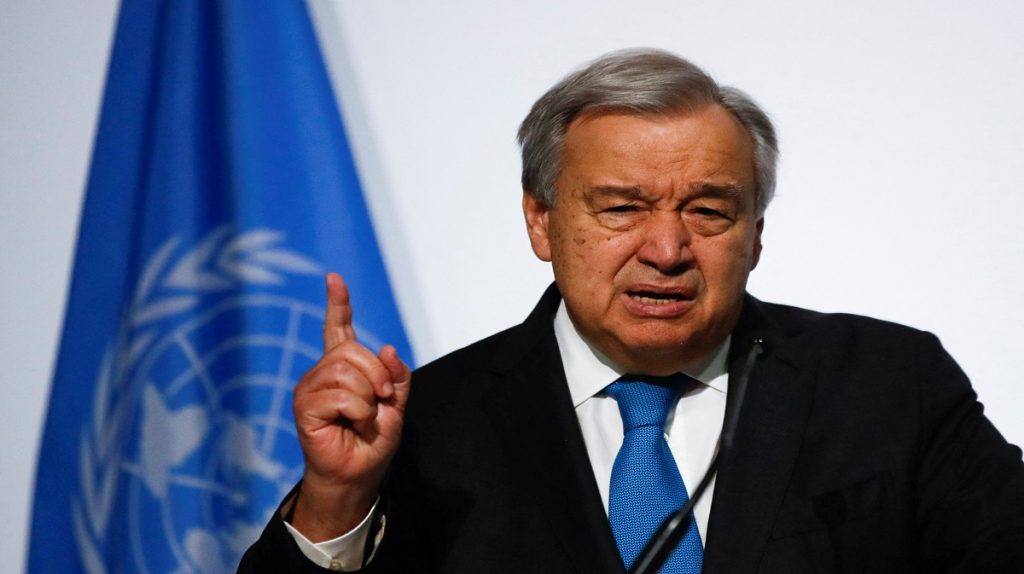
He was addressing a high‑level open debate of the UN Security Council convened by Somalia, which holds the Council presidency for January. The discussion took place against a backdrop of multiplying conflicts, rising global tensions and weakening confidence in international institutions, even as the UN marks 80 years since the adoption of its Charter, the document intended to prevent war and human suffering.
“The rule of law is a cornerstone of global peace and security,” Guterres said, calling it “the beating heart” of the UN Charter. For eight decades, he noted, the Charter, alongside the Universal Declaration of Human Rights, the Geneva Conventions and other core legal instruments, has helped the world avoid another global war and limit the impact of countless conflicts.
But he warned that these commitments are increasingly being ignored. “Around the world, the rule of law is being replaced by the law of the jungle,” he said, pointing to what he described as blatant violations of the UN Charter and international law, including the illegal use of force, attacks on civilian infrastructure, human rights abuses and the obstruction of humanitarian aid.
From Gaza to Ukraine, he added, the rule of law is being treated as “an à la carte menu”, with States choosing which rules to follow. This, he warned, encourages impunity and undermines trust among nations.
For smaller or less‑powerful countries, especially those shaped by historical inequalities and colonial legacies, international law is “a lifeline promising equal treatment, sovereignty, dignity and justice”. For powerful States, he said, it is “a guardrail” that defines what is acceptable during times of tension or conflict.
He stressed the unique responsibility of the Security Council, the only body empowered by the Charter to adopt binding decisions and authorise the use of force. “Its responsibility is singular. Its obligation is universal,” he said.
–UN/ChannelAfrica–


