


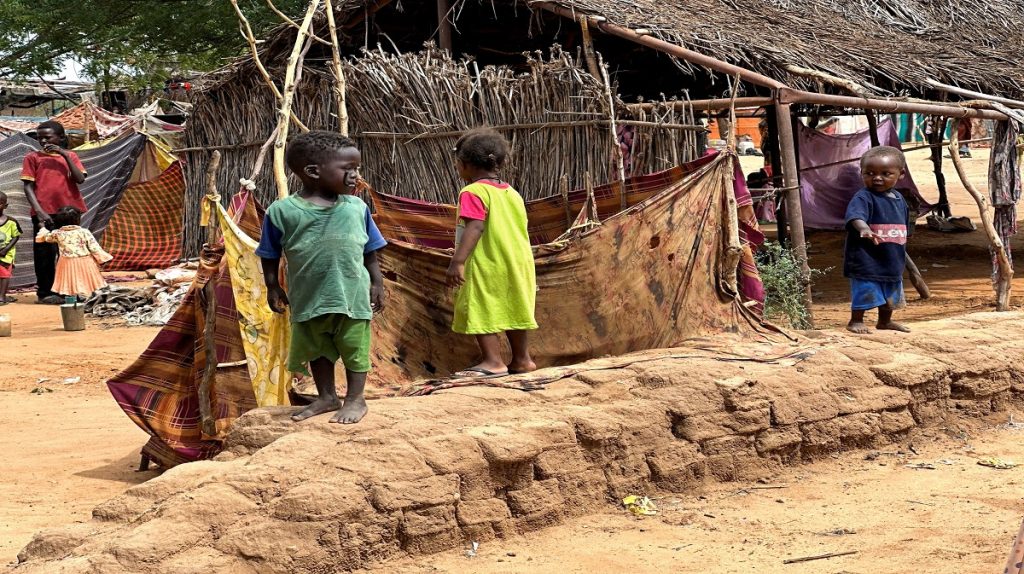
Briefing journalists in Geneva following a 10‑day mission to Darfur, Eva Hinds, UNICEF’s Chief of Communications, described a humanitarian response that is “fragile, painstaking and essential” amid one of the world’s most severe, yet least visible, crises.
For nearly three years, Sudan has been engulfed in a brutal conflict between rival military forces that were once allies, destabilising multiple neighbouring countries and pushing millions toward starvation and displacement.
“In Darfur today, reaching a single child can take days of negotiation, security clearances and travel across sand roads under shifting frontlines,” Hinds said. “Every movement is hard‑won, every delivery fragile.”
Hinds recounted her visit to Tawila in North Darfur, where hundreds of thousands of people have taken refuge after fleeing escalating violence. Makeshift shelters of sticks, hay and plastic stretch across the landscape, creating what she described as an entire city born out of desperation.
“Between 500 000 and 600 000 people are sheltering there,” she said.
“Standing in that vast expanse of makeshift shelters was overwhelming; it felt like a city uprooted and rebuilt out of necessity and fear.” Despite the immense challenges, UNICEF and its partners continue to reach children with lifesaving support.
In just two weeks, aid workers managed to:
- vaccinate over 140 000 children,
- treat thousands for illness and malnutrition,
- restore safe water for tens of thousands, and
- open temporary learning spaces amid the chaos.
“It is painstaking, precarious work, delivered one convoy, one clinic, one classroom at a time, but for children in Darfur, it is the thin line between being abandoned and being reached,” Hinds said.
She shared the story of Doha, a teenager who recently fled Al‑Fasher and dreams of returning to school to become an English teacher. “Her name refers to the soft light after sunrise,” Hinds noted. “She embodies that image, hopeful and determined.”
At a nutrition centre, she met Fatima, a young girl receiving treatment after losing her mother to the conflict. At a women’s centre, mothers described having no blankets, warm clothing or food.
“The children are freezing,” one mother said. “We have nothing to cover them with.” “These personal stories reflect only a small part of a much wider situation,” Hinds stressed, warning that Sudan has become the world’s largest humanitarian emergency, yet remains among the least visible on the global agenda.
“What I witnessed is a humanitarian catastrophe unfolding on a massive scale,” she said. “Sudan’s children urgently need international attention and decisive action. Without it, the horrors facing the country’s youngest and most vulnerable will only deepen.”
–UN/ChannelAfrica–


