


According to media reports, the measures would ease the process for settlers to take over Palestinian land, further expanding Israel’s authority in the territory.
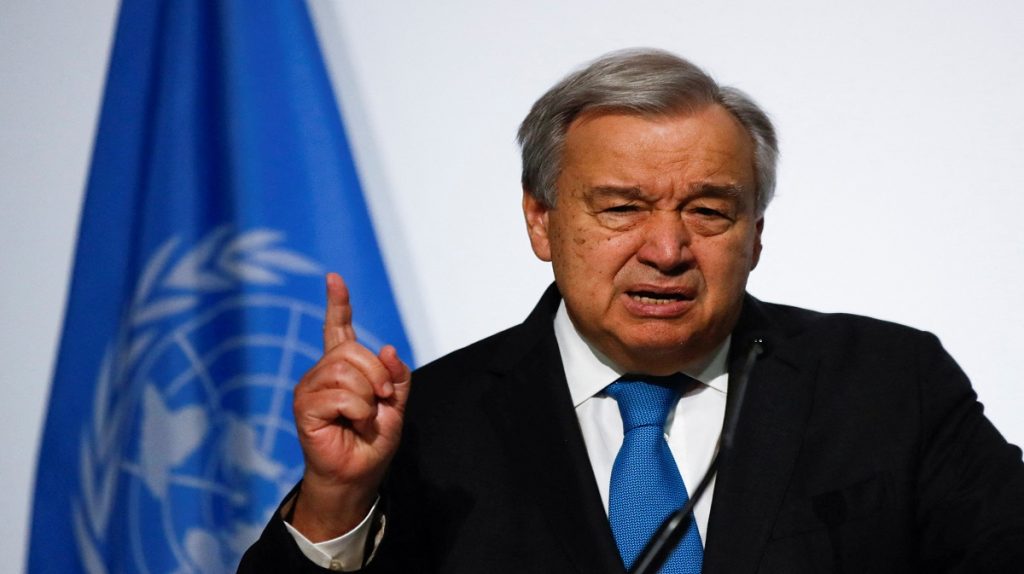
In a statement issued by his Spokesperson on Monday, Guterres warned that developments on the ground, including this latest decision, are steadily eroding the viability of the two‑State solution. He reiterated that Israeli settlements in the occupied West Bank, including East Jerusalem, are illegal under international law and have no legal validity.
The statement added that Israel’s continued presence in the Occupied Palestinian Territory is “not only destabilising but, as recalled by the International Court of Justice, unlawful.” Guterres called on Israel to reverse the measures and urged all parties to preserve the only credible path to lasting peace: a negotiated two‑State solution in line with Security Council resolutions and international law.
Speaking in New York, UN Spokesperson Stéphane Dujarric told journalists that the decisions announced by Israel were taking the region in the wrong direction. He said they were driving the situation further away from a two‑State solution and undermining the ability of the Palestinian Authority and the Palestinian people to shape their own future.
While tensions escalate in the West Bank, humanitarian efforts in Gaza continue under extremely difficult conditions. Aid agencies are delivering hundreds of thousands of meals each day, alongside digital cash assistance and monthly food rations, despite severe operational constraints.
Gaza City remains critically short of drinking and domestic water. Even with the recent reopening of the Mekorot water line from Israel, only around 6 000 cubic metres of water are reaching the city daily, with significant losses in hard‑to‑reach areas.
To compensate, UN agencies and partners have increased water production and expanded trucking of supplies from groundwater wells and private desalination plants. Hygiene support is also being stepped up, with large quantities of water containers, soap, latrines, hygiene kits and other sanitation items distributed across Gaza in recent weeks to limit the spread of disease.’
Explosive remnants of war remain a severe threat. Mine‑action teams conducted more than 200 hazard assessments last week to support debris removal and reached more than 10 000 people, including many children, with risk‑awareness education. Since the ceasefire took effect last October, 33 explosive‑ordnance incidents have been recorded, resulting in nine deaths and 65 injuries.
Humanitarian access continues to be heavily restricted. The UN Office for the Coordination of Humanitarian Affairs reports that relief operations are hampered by limits on items classified as “dual‑use,” including crucial spare parts and shelter materials. Israel’s de‑registration of several international non‑governmental organisations, as well as restrictions on UN Relief and Works Agency for Palestine Refugees and other UN agencies, has further undermined the scale and effectiveness of aid efforts.
The UN continues to warn that without meaningful political action, expanded humanitarian access and adherence to international law, conditions in Gaza and the West Bank will deteriorate further, deepening the crisis and distancing the region from any prospect of peace.
–UN/ChannelAfrica–


