


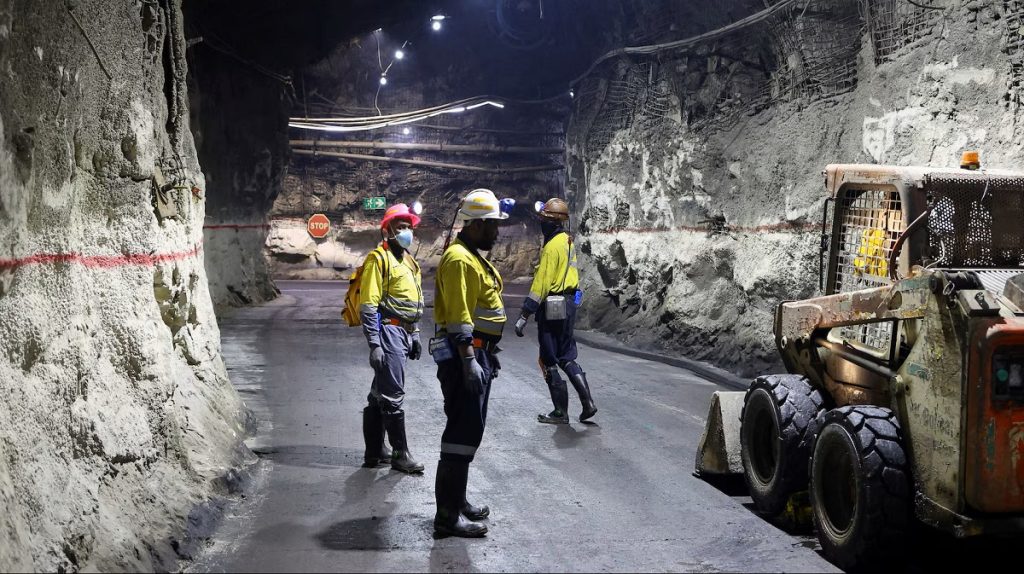
With copper, lithium and other strategic resources now central to global defence, clean energy and artificial intelligence, attention has increasingly turned to Africa as governments and companies seek to secure supply chains.
A major theme at this year’s conference was the United States (US) backed Lobito Corridor, a flagship infrastructure project aligned with Washington’s 2026 critical minerals agenda. The initiative aims to channel copper and cobalt from the Democratic Republic of Congo (DRC) and Zambia to Angola’s Atlantic coast, reducing reliance on routes dominated by China.
Abigail Hunter, Executive Director of the Centre for Critical Minerals at Securing America’s Future Energy, told Channel Africa on Friday that the Indaba reflected a new sense of optimism among African governments. She said the region could play a far more decisive role in the future of global mineral supply chains if supported by strong infrastructure and transparent partnerships.
Hunter said mineral security carries different implications for African countries than for the US and Europe. For producing countries, the opportunity lies not only in exporting raw minerals but in using the global energy transition to unlock industrialisation, technological advancement and economic growth.
She said the Lobito Corridor illustrates how international partners can support African goals by creating fair and predictable transport routes for minerals while also encouraging broader development benefits in areas such as agriculture and tourism.
However, Hunter warned that the biggest constraint to value addition in Africa is energy access. Countries aiming to expand into refining and processing require stable, reliable and affordable electricity. Without this, she said, Africa cannot fully participate in higher value segments of critical mineral supply chains.
Balancing energy transition demands with baseload needs remains complex. Hunter noted that minerals such as lithium, cobalt, manganese and copper will continue to underpin both renewable energy technologies and traditional energy systems for years to come.
She said the US sees diversification as essential to reducing China’s dominance in mineral processing. Ensuring African countries benefit equitably, she said, requires aligning national security priorities with long term, inclusive development for the DRC, Zambia and Angola.
–ChannelAfrica–


