

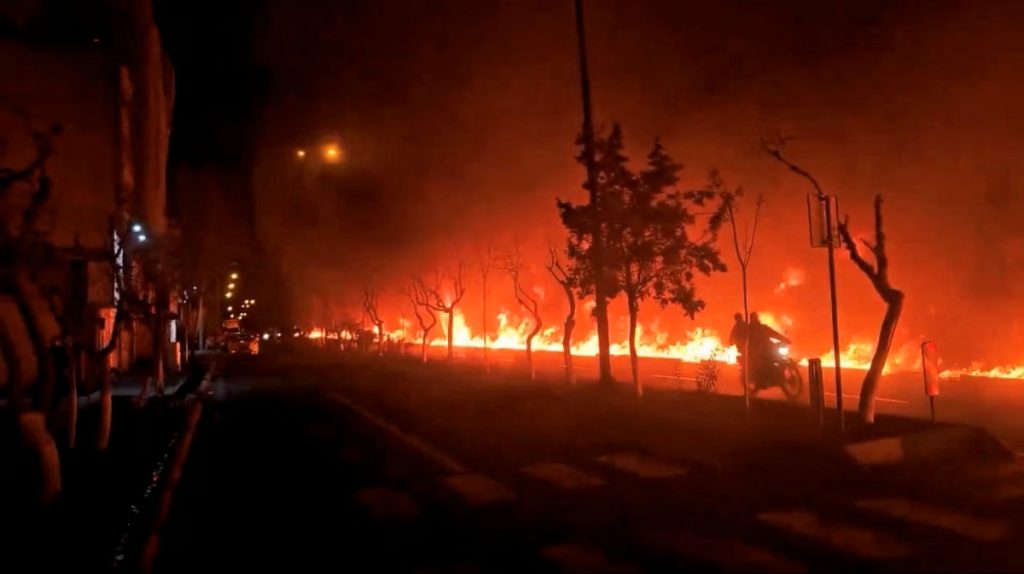
Toxic “black rain”, mass displacement and the disruption of critical aid and commercial supply chains are deepening the crisis well beyond the immediate conflict zones.
Speaking in Geneva on Tuesday, Ravina Shamdasani, spokesperson for the UN Human Rights Office (UNHCR), voiced grave concern over the health and environmental impact of Israeli and US strikes on oil depots in Tehran.
She said toxic pollutants released into the air had raised “serious questions” about whether the attacks met international humanitarian law requirements for proportionality and precaution, noting that the targeted oil sites “do not appear to be of military exclusive usage”.
The World Health Organisation (WHO) confirmed that residents of Tehran have been reporting “black rain” or “acidic rain” following the strikes. WHO spokesperson Christian Lindmeier said the phenomenon “is indeed a danger”, with Iranian authorities urging people to stay indoors due to the release of hydrocarbons, sulphur oxides and nitrogen compounds.
WHO is also monitoring health risks stemming from reported Iranian retaliatory strikes on oil infrastructure in Bahrain and Saudi Arabia, warning that the resulting pollutants may contribute to “wider regional pollution exposure”, with long‑term effects on respiratory health and water contamination.
Meanwhile, the humanitarian situation in Lebanon is deteriorating rapidly. More than 100 000 people were displaced in the past 24 hours alone, bringing the total number uprooted since the conflict began to nearly 700 000.
Karolina Lindholm Billing, UNHCR’s Representative in Lebanon, described scenes reminiscent of the 2024 conflict with Israel but unfolding at a much faster pace. “We see cars lined along the street with people sleeping in them,” she said. “Most fled in a rush with almost nothing.”
Billing recounted meeting a woman in her nineties sheltering in a Beirut school who had lost 11 family members in 2024 and is now displaced again. “Stories like hers illustrate the fear, uncertainty and repeated trauma that hundreds of thousands are facing right now,” she said.
UN humanitarians warn that continued airstrikes, displacement and supply‑chain disruption threaten to push the wider region into worsening instability, hunger and economic strain.
–UN/ChannelAfrica–


