


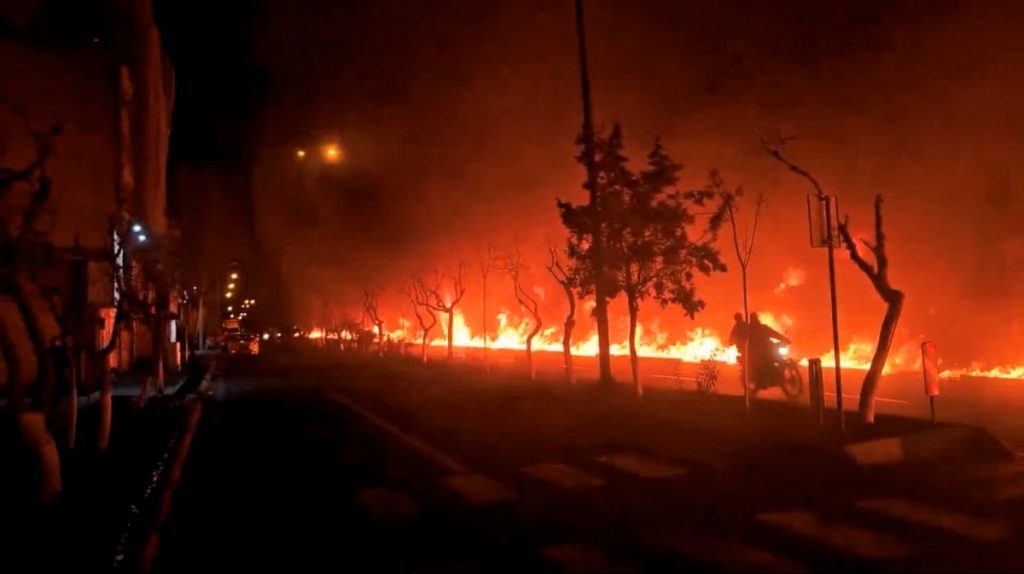
The developments come as the war continues to intensify across the region, prompting growing international concern.
The Bahrain‑tabled resolution, introduced on behalf of the Gulf Cooperation Council and Jordan, was adopted with 13 votes in favour and two abstentions from China and Russia. The text “condemns in the strongest terms the egregious attacks” by Iran against Bahrain, Kuwait, Oman, Qatar, Saudi Arabia, the United Arab Emirates and Jordan, declaring them “a breach of international law and a serious threat to international peace and security”.
The resolution demands the “immediate cessation” of all Iranian attacks and urges Tehran to comply fully with its obligations under international law, including protecting civilians.
Explaining China’s abstention, Ambassador Fu Cong said Beijing recognised Gulf states’ security concerns but believed the resolution lacked balance. “China is deeply concerned about the rapidly escalating situation in the Gulf region,” he said, warning that the crisis risks “pushing the entire Middle East into a dangerous abyss”.
He argued that the text did not sufficiently reflect the broader context or root causes of the crisis, leading China to abstain while urging all parties to halt military operations and resume dialogue. Minutes later, the Council considered a Russian‑drafted resolution calling for all parties to stop military activities immediately and avoid further escalation. Unlike the Bahrain‑led text, Moscow’s draft did not name any specific actors.
The resolution received only four votes in favour, two against and nine abstentions, falling far short of the required nine affirmative votes. Under UN rules, a permanent member’s veto is not needed to block a resolution that fails to meet the minimum vote threshold.
Latvia was among the states voting against the Russian draft. Ambassador Sanita Pavļuta‑Deslandes said that although Latvia supported the principles outlined, it could not back a text proposed by a country that “itself is violating daily for years the very principles it now calls upon others to respect”.
She said the draft was not submitted “in good faith”, compelling Latvia to vote against it despite agreeing with some of the values it referenced.
–UN/ChannelAfrica–


