

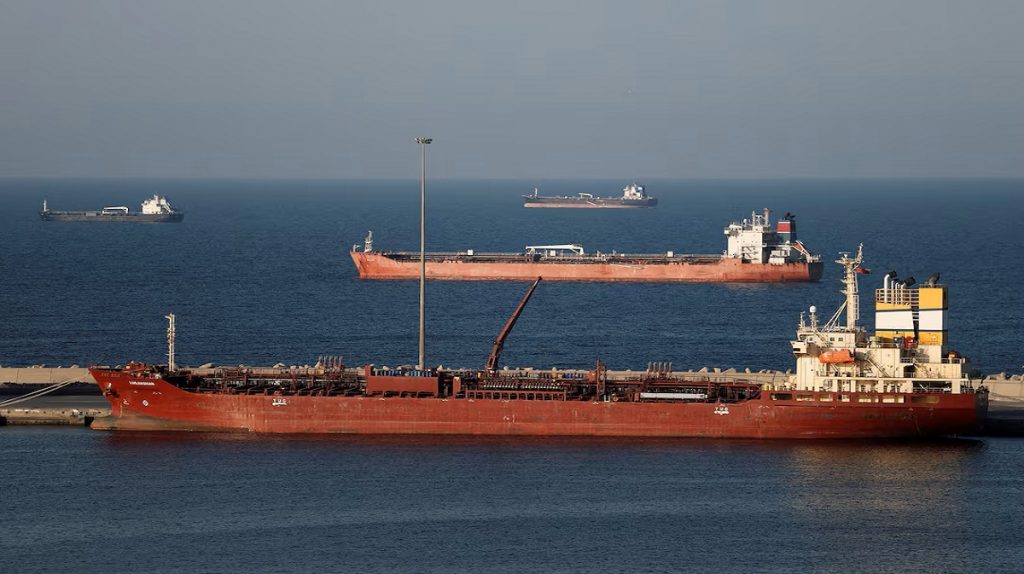
It remains unclear whether sea mines have been laid in the strategically vital strait, which has largely been closed to commercial traffic as Iran continues hostilities with the United States, Israel and regional allies. Reopening the waterway is regarded as critical for restoring the flow of oil and fertiliser to global markets.
Paul Heslop, an expert with the UN Mine Action Service (UNMAS), spoke to UN News ahead of the International Day for Mine Awareness and Assistance on April 4. While UNMAS primarily deals with land‑based explosive threats, Heslop said the risks at sea would be considerably greater.
“We do know that the Iranian navy had a significant stockpile of sea mines prior to the conflict,” he said. Although there are no confirmed reports on whether mines have been deployed, he noted that such weapons are relatively easy to lay using small boats or dedicated minelayers.
Heslop explained that sea mines can be positioned on the surface, suspended in the water column or anchored to the seabed. Some drift with currents, while others are tethered in place. They may be triggered by contact, magnetic influence, remote control or timed detonation.
“What makes sea mines more difficult is that you are not just dealing in three dimensions, but four, because time also matters,” he said. Tidal movements or currents can re‑contaminate areas that were previously cleared, while some mines are self‑propelled, creating a constantly changing threat.
Detection is also complicated. While magnetometers, sonar and radar can identify underwater devices, temperature layers in the sea can deflect sound waves, reducing the effectiveness of detection systems.
“Finding and clearing sea mines is extremely challenging and very dangerous for the ships doing the work,” Heslop warned.
Most navies possess some mine‑countermeasure capability, although Heslop said the sector is transitioning from traditional crewed minesweepers to drone‑based and robotic systems.
If mines are confirmed once hostilities subside, he said, shipping would likely resume through escorted convoys operating in regularly cleared channels rather than the entire strait being swept daily.
“This would be the only practical solution to allow vessels to move safely through the area,” he said.
–UN/ChannelAfrica–





