


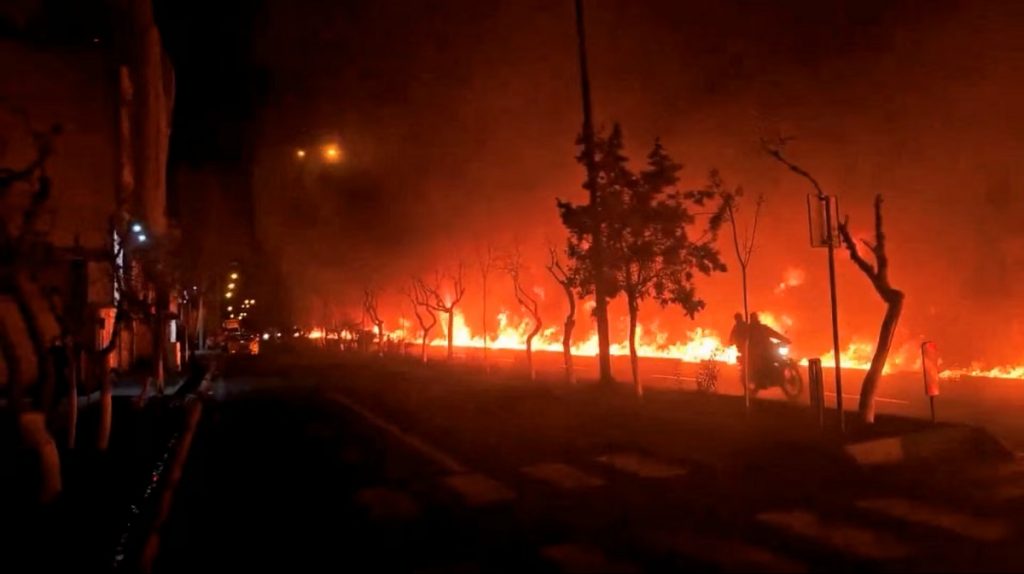
Speaking from Beirut, World Health Organisation (WHO) Representative Dr Abdinasir Abubakar said Lebanese health authorities have confirmed about 300 people were killed in the strikes, making it one of the deadliest single days since hostilities between Israeli forces and Hezbollah resumed on March 2. At least 1 150 people were injured, while many others remain missing and are believed to be trapped under rubble.
“Many body parts are still waiting to be identified,” Abubakar told reporters in Geneva.
Abubakar said the WHO received a warning on Friday that ambulances could be targeted, citing Israeli claims that Hezbollah is using emergency vehicles. He stressed that any misuse does not justify attacks on healthcare.
“Healthcare workers, facilities and ambulances are protected under international humanitarian law,” he said. “Without these services, lives will be lost.”
WHO also reported that evacuation orders have been expanded in Beirut’s Jneh area, which includes Rafik Hariri and Al Zahara hospitals. Both facilities are operating at full capacity, treating around 450 patients, including 50 in intensive care.
“We decided not to evacuate because there is nowhere to evacuate them to,” Abubakar said, adding that Lebanon’s medical supplies were already critically low before the latest strikes.
UN Refugee Agency Spokesperson Eujin Byun said families who had already fled earlier fighting have once again been uprooted after areas previously considered safe were hit.
“The destruction of the Qasmiyeh Bridge has made movement between southern and northern Lebanon much more difficult,” she said, warning that some 150 000 people remain in the south and require safe humanitarian access.
The World Food Programme (WFP) warned that the situation is rapidly becoming a food crisis. WFP Lebanon Director Allison Oman said more than 80% of markets in the south are no longer functioning.
“In one month, vegetable prices have risen by more than 20% and bread prices by 17%,” she said. “With incomes disrupted and demand rising, this is deeply worrying.”
The April 8 strikes came just hours after a ceasefire was announced between the United States and Iran, though fighting between Israel and Hezbollah has continued, underscoring the fragility of the situation.
–UN/ChannelAfrica–


