
The contribution positions Guinea as the largest African contributor to ADF‑17 and forms part of a wider shift in how the ADF is financed. For the first time in its history, 24 African countries have pledged a combined $182 million, with 20 countries contributing for the first time. African participation has increased fivefold compared with the previous replenishment cycle, ADF‑16, signalling growing continental ownership of the platform.
ADF‑17 supports 37 low‑income and structurally vulnerable countries, channelling concessional capital into infrastructure, agriculture, energy, governance, and productive sectors with a focus on implementation and measurable results.
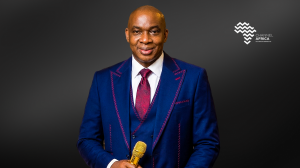
Guinea Minister of Economy and Finance Mourana Soumah, who also serves as AfDB Governor for Guinea, said the pledge reflects a strategic choice by African states to sustain the instrument that finances the continent’s most vulnerable economies.
Soumah said the contribution demonstrates confidence in the Fund and aligns with a broader vision of African countries taking greater responsibility for financing development priorities, despite fiscal constraints.
The ADF has financed 51 projects in Guinea, with cumulative commitments exceeding $578 million. Within the Bank Group’s active portfolio in the country, concessional financing accounts for nearly 60% of operations, spanning agriculture, energy, public works, governance, and financial sector reform.
In agriculture, Guinea participates in the Regional Resilient Rice Value Chains Development Programme, backed by $8.5 million in financing. The programme focuses on improving production systems, boosting yields, strengthening market integration, and raising farmer incomes while supporting food security.
The AfDB is also providing upstream support to Guinea’s Simandou 2040 Programme, designed to catalyse large‑scale investment in infrastructure and industrial development. The programme is expected to mobilise several billion Dollars, integrating mining, rail, and port systems to open new economic corridors and expand regional trade.
Simandou hosts one of the world’s largest untapped high‑grade iron ore deposits and is central to Guinea’s strategy to convert natural resource wealth into infrastructure expansion, industrial activity, and job creation.
Guinea plays a strategic role in global supply chains as a leading producer of bauxite, accounting for roughly 29% of global output. Current investment plans aim to expand processing capacity and deepen value addition across sectors.
Regional integration features prominently in the Fund’s engagement, including energy and transport connectivity. The Guinea–Mali electricity interconnection project, supported by nearly $26 million in additional concessional financing, is expanding transmission capacity, enabling cross‑border power trade, and increasing electricity supply in eastern Guinea under the West African Power Pool framework.
By reducing infrastructure bottlenecks and transaction costs, AfDF‑supported investments are designed to facilitate trade, improve the movement of goods and services, and broaden access to economic opportunity across West Africa.
Soumah described African co‑investment in the Fund as both a financial and strategic act, arguing that shared ownership strengthens the ADF’s legitimacy and aligns its capital with African development priorities.
–AfDB/ChannelAfrica–





