

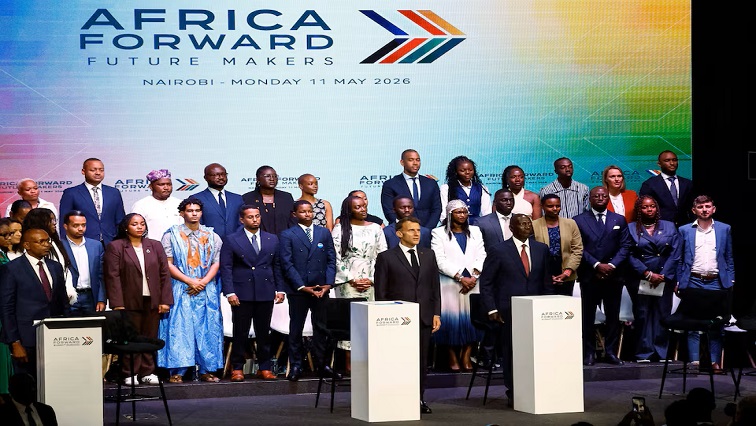
At the centre of the discussions was the New African Financial Architecture for Development (NAFAD), an initiative led by the African Development Bank Group to address what leaders described as a structural failure in how capital is mobilised, deployed, and scaled in Africa.
The summit, co-hosted by the Kenyan Presidency and the French Presidency, brought together heads of state, development institutions, investors, and private sector actors around a shared objective: shifting Africa’s development model away from aid dependency towards co-investment, risk-sharing, and African-led financing solutions.
African Development Bank Group (AfDB) President Sidi Ould Tah framed the central challenge not as a lack of money, but as a failure to convert available capital into investable projects.
Ould Tah said Africa holds close to $4 trillion in domestic savings, yet attracts only 1% of global institutional capital and 4% of foreign direct investment. At the same time, the continent faces a development financing gap of more than $400 billion annually.
Ould Tah identified a $40–50 billion annual gap in guarantees and investment insurance as a key constraint preventing large-scale projects from reaching financial close, particularly in infrastructure, energy, and industrial sectors.
The financing shortfall is closely linked to employment pressures. Each year, 12 to 15 million young Africans enter the labour market, while only about 3 million formal jobs are created, highlighting the need for faster capital mobilisation into productive sectors.
Summit discussions positioned NAFAD as a mechanism to address that imbalance by reducing perceived investment risk and crowding in long-term private capital.
A key outcome of the summit was agreement on the first phase of implementation, centred on scaling the role of African Trade and Investment Development Insurance (ATIDI), a Nairobi-based pan-African investment and credit insurer.
ATIDI is expected to anchor a continental guarantee architecture, providing risk cover that enables investors to commit capital to projects that would otherwise be considered too risky.
Support for this approach cut across political and institutional lines. The Kenyan presidency called for recapitalisation of ATIDI as a critical pillar of Africa’s emerging financial architecture, while the French presidency signalled support for a continental first-loss guarantee strategy built around the institution.
The UN Secretary-General also highlighted the importance of mobilising domestic African resources to finance African priorities, reinforcing a broader shift toward financial sovereignty.
The discussions in Nairobi reflected a growing consensus that traditional aid-based approaches are insufficient to meet Africa’s scale of need. Instead, the focus is shifting toward systems capable of:
- Mobilising African savings
- Strengthening local capital markets
- Attracting institutional investors
- Scaling private sector investment into growth sectors
NAFAD is designed as a coordination platform rather than a new institution, aligning African and international actors around four principles: subsidiarity, complementarity, coordination, and disciplined risk transformation.
The initiative has already been endorsed by African leaders at the African Union summit and further anchored through the Abidjan Consensus adopted earlier this year. However, summit discussions made clear that political commitment must now translate into execution.
Ould Tah said Africa now has both the institutional framework and political backing required to move forward, with the remaining challenge centred on scaling capital deployment in line with development priorities.
–AfDB/ChannelAfrica–





