

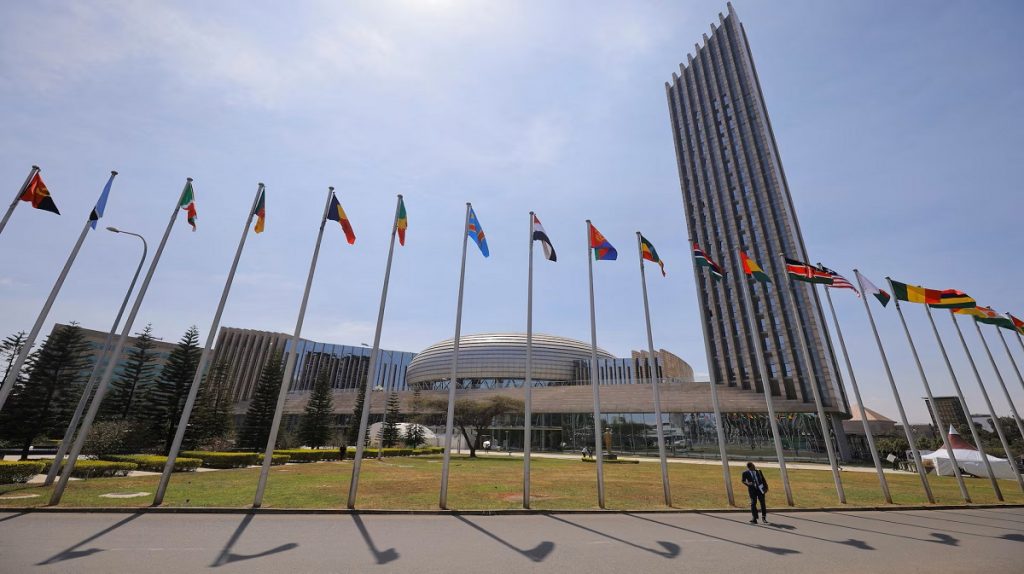
The meeting between the UN and the AU focused on strengthening cooperation across security, development, and human rights, while also highlighting structural barriers facing African economies in the global system.
Secretary‑General António Guterres said current global institutions no longer reflect present realities, pointing specifically to governance structures designed in the mid‑20th century.
Guterres said the continued absence of permanent African representation in the UN Security Council remains a “historical injustice”, arguing that reform is essential for legitimacy and effectiveness in global decision‑making.
The remarks renewed calls for greater African participation across international institutions, especially in forums that shape peacekeeping mandates and global economic rules.
Beyond governance, Guterres highlighted persistent inequities in the global financial architecture, stressing that African economies face disproportionately high borrowing costs.
Guterres said some African countries pay significantly higher interest rates than global benchmarks, reducing available fiscal space for essential services such as healthcare, education, and infrastructure.
The meeting also acknowledged emerging African-led responses, including efforts to reshape development finance frameworks and improve access to capital through continental initiatives designed to pool resources and manage risk more effectively.
Climate change was identified as a major driver of vulnerability, with Africa facing severe impacts despite contributing minimally to global emissions.
Guterres said rising temperatures and extreme weather continue to disrupt food systems, displace communities, and strain economies. At the same time, the continent remains underfunded in energy transition investment.
Despite holding vast renewable potential, Africa receives only a small share of global clean energy finance, limiting the pace at which access to electricity can expand across the continent.
The discussion also addressed spillover effects from the Middle East crisis, particularly disruption in the Strait of Hormuz, which has affected energy prices, supply chains, and fertiliser costs.
Guterres warned that even short‑term disruptions carry long‑lasting consequences, while prolonged instability risks slowing global growth and increasing inflation, with African economies among the most exposed.
Peace and security remained a core pillar of AU‑UN engagement, with both sides reaffirming support for African‑led initiatives such as Silencing the Guns, as well as cooperation on conflicts across Sudan, the Sahel, Libya, and the Democratic Republic of the Congo.
Guterres called for urgent progress on conflict resolution, particularly in Sudan, alongside renewed dialogue in the Sahel to address violent extremism and instability.
The meeting concluded with a renewed declaration reinforcing cooperation frameworks between the UN and the AU, signalling continued institutional alignment.
Guterres said ties between the two organisations are stronger than ever, while positioning Africa as central to global progress rather than a peripheral actor.
–UN/ChannelAfrica–


