


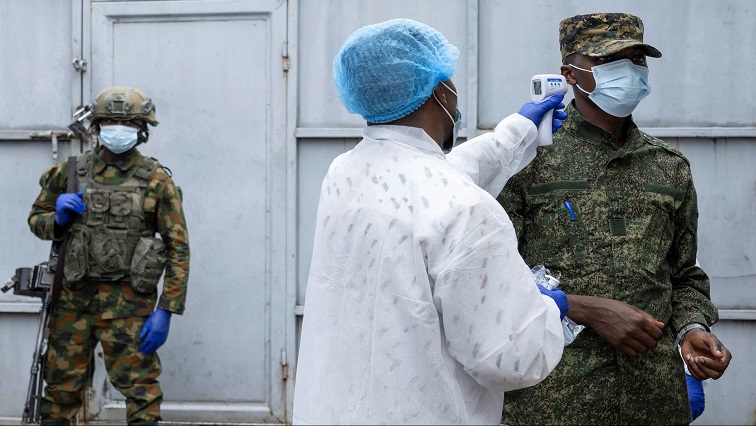
Health officials say progress has been made since the outbreak was declared on May 15, particularly in expanding testing capacity. World Health Organisation Spokesperson Tarik Jašarević said testing for the Bundibugyo strain is now available across six locations, including Bunia, Bukavu, Goma and Kinshasa, with additional laboratories activated in neighbouring Uganda.
Despite these gains, Jašarević warned that gaps remain in surveillance and detection. “We have blind spots where we get a low number of alerts… there may be transmission chains that are not being detected,” Jašarević said.
Jašarević said undetected infections continue to pose a risk, particularly in areas where monitoring is limited, and healthcare access remains constrained.
Humanitarian organisations say the challenge extends beyond medical response, with community resistance and misinformation complicating containment efforts.
International Federation of the Red Cross and Red Crescent Societies Operations Manager Bruno Michon said trust is essential to breaking the chain of transmission.
“But in this outbreak, it is not optional. It is lifesaving,” Michon said.
Michon, speaking from Bunia, described widespread scepticism within affected communities, including doubts about the existence of the disease.
“Some people still question whether the disease is real… [or believe] it has been invented to attract foreign aid,” Michon said.
Traditional practices and cultural beliefs have also contributed to resistance, particularly around safe burial procedures. “Others see safe and dignified burials as an attack on culture and tradition,” Michon said.
Officials say fear and stigma are preventing people from reporting symptoms or seeking treatment, increasing the risk of further spread. “When people are afraid, they may not report symptoms… they may avoid treatment centres,” Michon said.
The outbreak has also been affected by insecurity in eastern DRC, where conflict has displaced more than 100 000 people. Earlier in the response, two treatment centres were set on fire, reportedly linked to misinformation campaigns.
To address community concerns, responders have adapted their approaches, including modifying burial practices and improving communication.
“Following community feedback, we started using body bags with a window so that families can see the face of the deceased,” Michon said.
“We demonstrated how disinfectants are prepared,” Michon added, after concerns that chlorine was being used to harm communities.
Michon said these measures are aimed at rebuilding trust and improving cooperation with health authorities. “Without trust, we cannot detect cases early… we cannot stop the transmission,” Michon said.
–UN/ChannelAfrica–


