
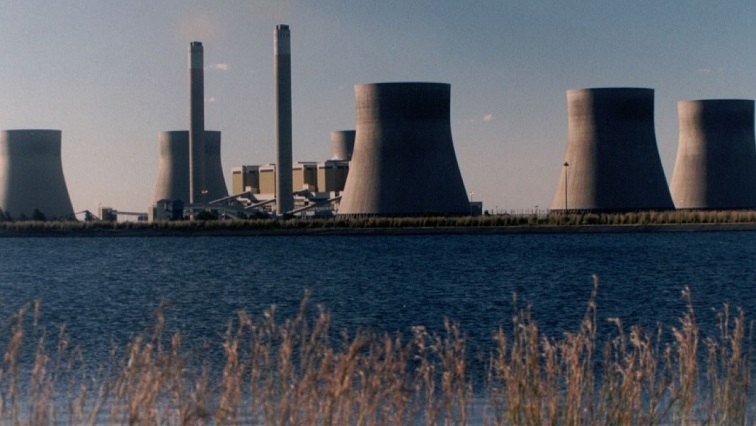
The discussion follows recent improvements at power utility, Eskom, including more than 300 consecutive days without load shedding and an increase of about 4 400MW in available capacity compared to the previous year.
Energy Expert Tshepo Kgadima said the surplus is not solely the result of operational improvements, but also shifting demand patterns in the economy.“The surplus electricity is not solely a factor of the management of Eskom; energy-intensive industries have been migrating, and affluent households are going off-grid,” Kgadima said.
Kgadima said rising electricity tariffs have contributed to reduced demand, with major industrial consumers scaling back operations or exiting the grid altogether.
Kgadima described the situation as a “blessing in disguise”, arguing that the surplus could position SA to benefit from emerging global industries. “One can say this is a blessing in disguise globally now you have growth in the artificial intelligence economy,” Kgadima said.
Kgadima said SA has a unique advantage due to its available power capacity, which is critical for energy-intensive sectors such as artificial intelligence and data centres. “Artificial intelligence works on three pillars power, compute, and connectivity and SA has excess power,” Kgadima said.
Kgadima proposed a coordinated strategy to position the country as a hub for AI-related investment, bringing together state-owned entities in energy, telecommunications and digital infrastructure.
Kgadima said integrating institutions such as Eskom, Sentech, and Broadband Infraco could create a foundation for large-scale investment in digital infrastructure. “We need a concerted effort to ensure Eskom remains a leader and a low-cost producer of electricity,” Kgadima said.
Kgadima said global investment in AI infrastructure is accelerating, with hundreds of billions of dollars expected to flow into the sector. “If we capture even 10% of global investment, it could propel the economy and create jobs,” Kgadima said.
Kgadima warned that failure to act quickly could see investment diverted to other countries. “There are no vacuums if we do not act; investment will find a home elsewhere,” Kgadima said.
Despite the potential, Kgadima said challenges remain within the energy sector, including declining demand from large industrial users and financial pressures linked to municipal debt. “Eskom is haemorrhaging customers and municipalities owe more than $6.12 billion,” Kgadima said.
Kgadima said surplus electricity is currently being held in reserve, which carries a cost for the utility without generating revenue.
Kgadima argued that without a strategic shift, the current surplus could become a liability rather than an asset.
The debate also comes as policymakers consider broader reforms, including the creation of an independent transmission operator, which could reshape how electricity is distributed and managed.
Kgadima said the focus should shift from how the grid is owned to how it can enable economic growth. “How do we ensure Eskom plays a foundational role in economic growth?” Kgadima said.
Kgadima said realising the opportunity will require coordinated action across government, the private sector and key institutions. “We need a rallying point to make a giant leap in the next five years,” Kgadima said.
–ChannelAfrica–





