

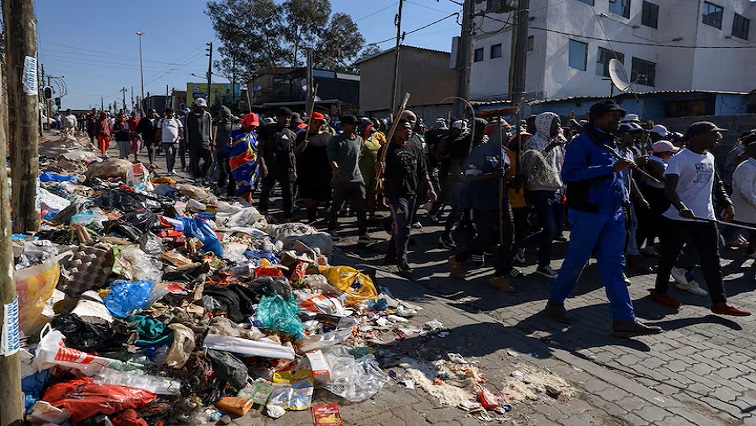
Economists are warning that mounting anti-immigration protests could trigger a severe economic backlash, hurting the very local businesses and labour markets that demonstrators claim to be protecting, Reuters reports.
Frustrations over a stagnant economy, high crime rates, and an unemployment rate hovering near 33% have fueled a sharp rise in xenophobic sentiment, culminating in recent high-profile door-to-door sweeps by vigilante groups in Johannesburg and a massive nationwide march on June 30. However, analysts caution that driving out thousands of foreign workers will likely stifle South Africa’s (SA) growth. The exit of foreign workers threatens to create sudden vacuum shortages in critical, hard-to-fill sectors where businesses heavily rely on migrant labor, including construction, agriculture, hospitality, transport, and the informal trading sector.
According to the Reuters report, the unrest has already directly rattled the retail supply chain. Vigilante actions targeting foreign-owned spaza shops, informal convenience stores operating out of garages, shipping containers, and township properties, threaten a vital pillar of the informal economy. These small shops directly support major commercial wholesalers, local landlords, and domestic employees.
While anti-migrant groups argue that foreigners drain public resources and take jobs, economic models cited by Reuters suggest a completely different reality. Past data from the OECD and International Labour Organisation estimated that immigrants contribute around 9% to SA’s Gross Domestic Product. Furthermore, a World Bank study revealed that for every migrant employed in the country, roughly two additional jobs are actually created for SA-born citizens due to increased economic activity and local consumer spending.
While foreign investors have remained relatively calm, the escalating tensions introduce a worrying new risk profile to a country that recently had its 2026 growth forecast trimmed to just 1.0% by the World Bank. Beyond domestic borders, the crisis risks choking regional trade and cutting off billions of Rands in vital cross-border remittance flows that support neighboring Southern African economies
–Reuters/ChannelAfrica–





