

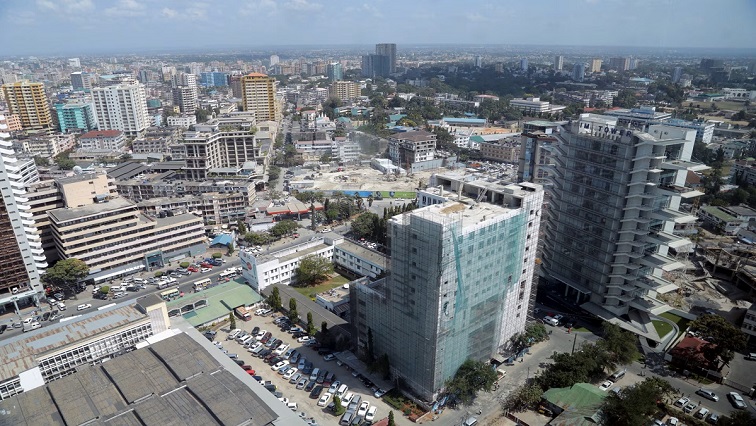
The IMF Executive Board approved the sixth and seventh reviews of Tanzania’s Extended Credit Facility (ECF) arrangement, together with the third and fourth reviews of the Resilience and Sustainability Facility (RSF). The decision unlocks immediate funding of approximately $154.1 million under the ECF programme and $289.7 million under the RSF programme.
The approval brings Tanzania’s total access under the ECF arrangement to approximately $1.06 billion, while total support under the RSF programme reaches about $636.5 million.
The ECF programme, launched in July 2022, was designed to support economic recovery, preserve macroeconomic stability and promote inclusive growth. The RSF programme, approved in June 2024, supports reforms aimed at strengthening climate resilience and reducing risks to the country’s balance of payments.
According to the IMF, Tanzania’s reform programme remained largely on track. All quantitative performance targets set for June 2025 were achieved, while most subsequent objectives were also met. The Fund noted that four structural reform benchmarks were implemented on schedule, with several others completed after delays.
The assessment found that Tanzania continues to record strong economic growth and relatively low inflation despite growing global uncertainty.
Gross domestic product expanded by 5.9% in 2025, while annual inflation stood at 4.0% in June 2026. However, the IMF warned that rising fuel prices linked to tensions in the Middle East are beginning to place pressure on households and businesses.
The country’s current account deficit is expected to remain broadly stable during the 2025/26 financial year, supported in part by strong gold export earnings that are helping offset higher import costs.
While the medium-term outlook remains positive, the IMF cautioned that risks have increased. A prolonged conflict in the Middle East could weaken growth prospects, increase inflationary pressures and place additional strain on the economy.
The Fund said continued fiscal consolidation remains important, particularly through stronger domestic revenue collection, improved value-added tax administration and enhanced public financial management.
The IMF also stressed the need for greater investment in education, healthcare and social protection to support poverty reduction and long-term development goals.
Deputy Managing Director Bo Li said Tanzania has maintained macroeconomic stability despite facing both domestic and external challenges.
Li noted that reforms have strengthened economic institutions and policy frameworks, while further progress in business environment reforms, private sector development and climate resilience initiatives would be critical for sustaining growth and creating employment opportunities.
The IMF said accelerating structural reforms will be essential as Tanzania works towards its Vision 2050 objectives. The Fund also highlighted the importance of climate-related reforms to strengthen economic resilience, attract climate finance and reduce future vulnerabilities to external shocks.
With Tanzania’s population projected to double by 2050, the IMF said maintaining reform momentum will be crucial to achieving sustainable growth, reducing poverty and preserving long-term debt sustainability.
–IMF/ChannelAfrica–





