
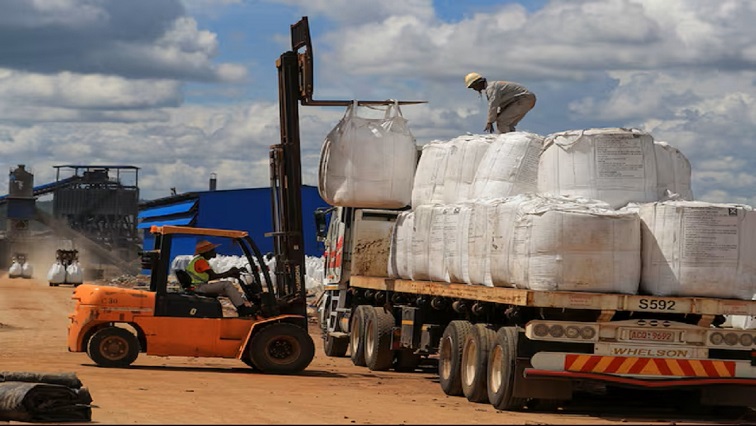
The meeting in New York is focused on minerals such as lithium, cobalt and copper, which are central to the global clean energy transition. Demand for these resources is expected to triple by 2030, raising questions about governance, conflict financing and fair benefit-sharing.
Russian Federation Deputy Permanent Representative Dmitry Chumakov said there is no single model for managing natural resources that can apply equally to all countries. “There is no universal model of natural resource governance that is equally suitable for everyone,” Chumakov said.
Chumakov said Moscow would not support approaches suggesting that state sovereignty over natural resources depends on governance and transparency conditions set externally.
Chumakov also noted that 20 African economies remain dependent on exports of unprocessed minerals, arguing that the continued extraction of raw materials from Global South countries shows that decolonisation remains incomplete.
Pakistan Ambassador Asim Iftikhar Ahmad said mineral wealth can support peace only when strong institutions and accountability are in place. “Resource wealth can contribute to affluence with peace only when accountability by strong institutions, transparency, national ownership and prioritising people’s welfare,” Ahmad said.
Ahmad pointed to the Democratic Republic of Congo (DRC) as an example of how illicit mineral exploitation can finance armed groups and deny citizens the benefits of national wealth.
Ahmad called for stronger traceability mechanisms, responsible supply chains and regional cooperation to disrupt conflict financing, drawing lessons from the Kimberley Process.
Colombia Acting Minister for Environment and Sustainable Development Erin Velez Torres warned that rising demand for critical minerals could trigger “a new extractive boom” without adequate safeguards. “We cannot allow this region once again to bear the environmental and social costs of extraction,” Torres said.
Torres said many critical minerals are found in the Global South, where biodiverse ecosystems and historically marginalised communities are concentrated. “Our task therefore is to build a robust international governance framework, capable of preventing and correcting the patterns of inequality and dispossession,” Torres said.
Democratic Republic of Congo Foreign Minister Thérèse Kayikwamba Wagner, speaking on behalf of President Félix Tshisekedi, said critical minerals must be treated as a peace and security issue. “When strategic resources finance war rather than development, it is no longer merely a national challenge,” Wagner said.
Wagner said natural resources are matters of sovereignty, development and responsibility. “There can be no truly just energy transition if it is built on injustice towards producing peoples,” Wagner said.
Wagner added that secure supply chains cannot exist without security for the states and communities producing those resources.
–UN/ChannelAfrica–





