

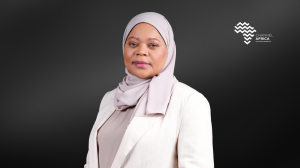
Speaking at the 2026 United Nations (UN) High-Level Political Forum, Haddadi said this year’s theme speaks directly to the world’s most pressing development challenges and requires urgent collective action.
The forum was held under the theme: “Transformative, Equitable, Innovative and Coordinated Actions for the 2030 Agenda for Sustainable Development and its Sustainable Development Goals for a Sustainable Future for All.”
Haddadi said the global community must move beyond gradual progress if sustainable development targets are to be achieved. “Addressing them requires more than incremental progress; it requires transformative, equitable, innovative and coordinated action,” Haddadi said.
Haddadi said the report by UN Secretary-General António Guterres reinforced the need for coherent and integrated systems capable of delivering sustainable development at scale.
According to Haddadi, Africa welcomes this approach because it reflects the philosophy behind the AU Agenda 2063. “For the AU Commission, Agenda 2063 and the 2030 Agenda are mutually reinforcing frameworks,” Haddadi said.
Haddadi said Agenda 2063 provides a pathway for Africa to advance continental priorities while also contributing to shared global commitments.
The AU Commission First Biennial Continental Progress Report shows that African countries have made significant progress in aligning Agenda 2063 with national development plans.
However, Haddadi said the main challenge now is implementation at scale. “Our challenge today is therefore one of implementation at scale — strengthening institutions, mobilising financing, accelerating innovation and deepening partnerships that deliver measurable results for our people,” Haddadi said.
Haddadi said Africa’s experience confirms that sustainable development cannot be achieved through isolated interventions. “Water security underpins food security; energy powers industrialisation. Industrialisation creates productive employment; sustainable cities drive resilience, inclusion and economic opportunity, and strong partnerships make transformation possible,” Haddadi said.
Haddadi said implementation continues to be constrained by persistent financing gaps, unsustainable debt, climate shocks and an international financial architecture that has not evolved in line with current development realities.
Haddadi called for reforms to the international financial architecture, greater access to affordable long-term development finance, faster climate finance, stronger technology transfer and investment in productive capacity.
According to Haddadi, these measures are needed to help countries create value, generate jobs and build resilient economies.
Haddadi said Africa’s young population, renewable energy potential, critical minerals and the African Continental Free Trade Area (AfCFTA) are major assets for both the continent and the world. “These are not simply Africa’s assets; they are global assets,” Haddadi said.
Haddadi said Africa stands ready to work with partners to advance Agenda 2063 and the 2030 Agenda with greater coherence, urgency and impact.
–ChannelAfrica–


