


Researchers at the University of the Free State Province, South Africa (SA) have developed a Deoxyribonucleic Acid (DNA) based technique that could transform the way wildlife populations are monitored.
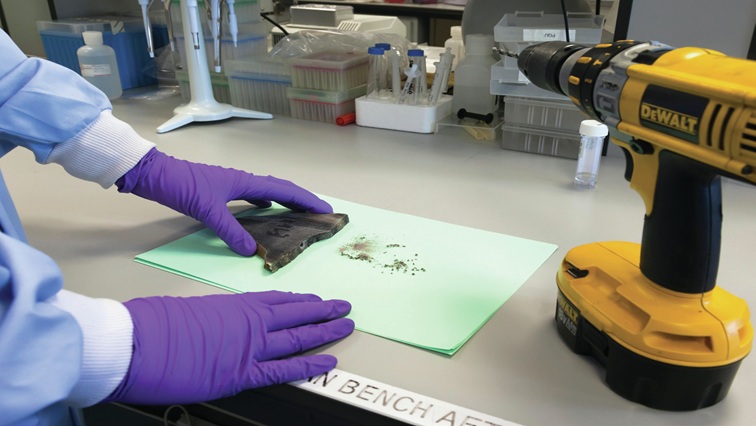
The method uses DNA extracted from animal dung to estimate the number of animals living in an area, without capturing or disturbing them.
Researchers say the technique could improve conservation efforts by providing more accurate population estimates, particularly for elusive and endangered species that are difficult to observe.
Counting wildlife has traditionally relied on aerial surveys or road counts,
Methods that are often ineffective for species living in dense vegetation or that are active mainly at night.
Researchers are testing a new approach that uses DNA extracted from animal dung to identify individual animals and estimate population size without direct observation.
The proof-of-concept study focused on a greater kudu population in the Doornkloof nature reserve in the Northern Cape Province.
–SABC–


