


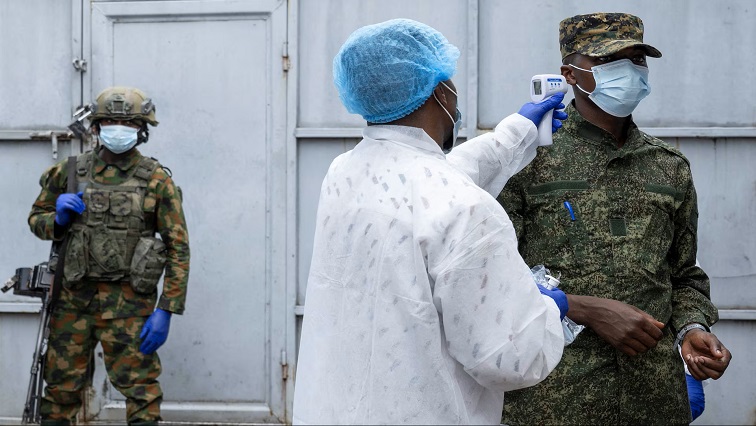
In its latest assessment, released on Thursday, the WHO said efforts to contain the outbreak are being undermined by patients reaching advanced stages of the disease without seeking medical care. The agency warned that deaths continue to occur outside health facilities and beyond known transmission networks, making it harder for health workers to track the virus. “Transmission is occurring faster than case detection and isolation, while contact tracing capacities are increasingly strained,” WHO said.
The outbreak remains concentrated in Ituri province, which accounts for around 90% of reported cases and 80% of deaths. The Bunia-Rwampara-Mongbwalu-Nizi corridor remains the main centre of transmission, although cases continue to emerge in neighbouring North Kivu and are increasing in Haut-Uélé province.
Health authorities have now recorded cases in 53 of 140 health zones across five affected provinces.
As of August 12, DRC authorities had reported 4 449 confirmed Ebola cases and 2 061 deaths, representing a fatality rate of 46%. Only 886 patients have recovered from the disease.
The figures place the outbreak on course to become the deadliest Ebola epidemic on record, potentially exceeding the 2014-2016 West Africa outbreak, which caused more than 11 000 deaths.
WHO highlighted some progress in surveillance efforts, with the national contact-tracing rate surpassing 85% for the first time. However, significant disparities remain across affected regions. In Haut-Uélé, contact tracing stands at about 58%, partly due to incomplete reporting.
The agency said weaknesses in alert systems and patient follow-up continue to allow some cases to evade surveillance, sustaining transmission chains that remain undetected.
Insecurity and mistrust within communities are also hampering response efforts. WHO noted that some incidents have delayed safe burial operations, increasing the risk of further infections.
The agency called for greater involvement of community leaders and trusted local networks to help identify cases, encourage people to seek treatment early and support safe burial practices.
Treatment capacity is also coming under pressure. Several Ebola treatment and transit centres in Ituri have reached capacity, while North Kivu lacks sufficient specialist referral facilities. WHO said none of the six affected health zones in Haut-Uélé currently has a treatment centre that meets required standards.
Adding to the challenge, delays in payments to some response personnel have been reported in several affected areas. WHO warned that the situation could affect staff morale and disrupt critical response activities, including community engagement and border monitoring operations.
The agency said the immediate priority is to identify transmission chains that remain hidden while expanding treatment capacity across affected provinces. WHO warned that unless case detection and isolation begin to outpace transmission, the outbreak will remain difficult to control.
–UN/ChannelAfrica–


