


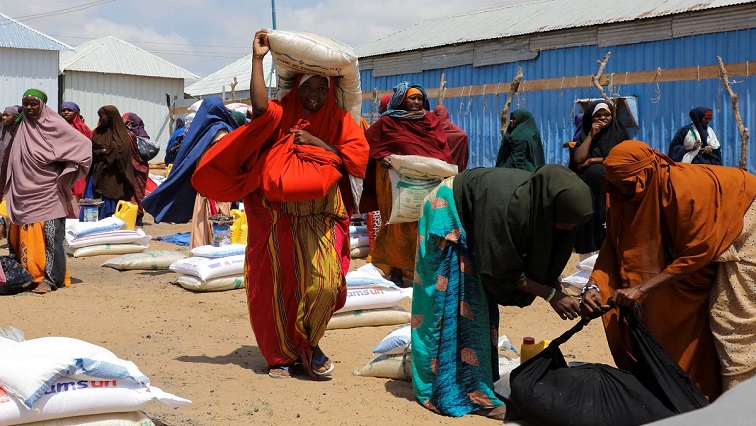
The warning comes as Somalia faces worsening humanitarian pressures driven by drought, conflict, displacement and climate-related shocks.
UNICEF Spokesperson James Elder highlighted the case of a woman named Hajio, who lost all her cattle during a drought and was forced to flee to Burhakaba in southwest Somalia in search of assistance.
Despite arriving in the town hoping to receive support, Hajio received only donated clothes and tomatoes from members of the local community. “She received nothing from the international community,” Elder said.
According to UNICEF, more than 200 health and nutrition facilities have already closed because of funding shortages. The agency warned that the number could rise to 618 if additional funding is not secured.
The closures are already having serious consequences for children.
Somalia has recorded a 32% increase in children being admitted to stabilisation centres with severe acute malnutrition and related complications compared with the same period last year.
Elder said the increase is not necessarily because more children are becoming malnourished, but because preventative and community-based nutrition services are no longer available in many areas. “Fewer facilities mean longer journeys for mums and their babies; longer journeys mean later treatment; later treatment means more severe illness and a greater risk of preventable death,” Elder said.
UNICEF estimates that nearly one million children under five, adolescent girls and women could lose access to nutrition services.
The funding crisis comes as humanitarian needs continue to rise sharply. Nearly 1.9 million children in Somalia are expected to suffer from malnutrition this year, including almost 500 000 with severe acute malnutrition, the deadliest form of the condition.
Somalia is also dealing with prolonged conflict, widespread displacement, drought in the north and the threat of severe flooding linked to a powerful El Niño weather pattern. “It is a brutal contradiction: the resources to protect vulnerable children are being cut at precisely the moment when the pressures pushing Somalia’s children into crisis are intensifying,” Elder said.
Despite funding pressures, UNICEF said previous investments had delivered strong results. Between 2021 and 2025, UNICEF-supported programmes treated more than 2.25 million children suffering from severe acute malnutrition, achieving a cure rate of 97.6% in 2025.
However, Elder warned that those gains are now at risk. “Years of generous donor investment in children’s futures is being undone far faster than they were built,” Elder said.
“We have the programmes. We have the partners. What is missing is the funding.”
Elder said reducing humanitarian support now would ultimately carry greater costs in lost development, increased insecurity and preventable deaths.
“Protecting children is not a discretionary expense,” Elder said. “For some children, the cost will be lives.”
–UN/ChannelAfrica–


