

The non-binding “Correct the Map” resolution received support from 164 countries, including France and the United Kingdom. The United States (US) cast the only opposing vote, while six countries abstained.
The resolution encourages institutions worldwide to move away from the traditional Mercator projection where the relative size of continents matters.
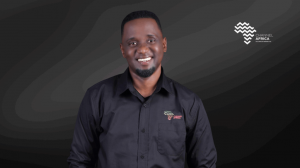
Africa No Filter, a non-profit organisation that works to challenge and change harmful narratives about Africa by amplifying authentic and diverse stories from the continent, Executive Director Moky Makura described the vote as a symbolic and practical victory for the continent.
Makura said the outcome demonstrated the potential of African countries working collectively around a shared objective. “It proves that when we as a continent get together and we are behind one issue, we can get things done, we can get the world to pay attention,” Makura said.
The Mercator projection has been widely used for centuries but makes Africa appear smaller than Africa’s actual geographical size. Makura said the distortion had influenced global perceptions while providing pupils with inaccurate geographical information. “For years, in fact, for centuries, everybody’s been looking at a diminished Africa,” Makura said.
The AU adopted a resolution supporting the Equal Earth projection in February 2026. Makura called for implementation across African education systems, including revised teaching materials in government schools.
The Equal Earth projection has been freely available online since 2018. Makura said education authorities and digital mapping companies could adopt the projection without significant technical barriers.
Global mapping platforms should also update systems that continue using the Mercator projection, according to Makura.
Makura declined to place emphasis on the US opposition, choosing instead to focus on the 164 countries supporting the resolution. According to Makura, the US objections were based on opinion rather than the geographical accuracy of the proposed change.
The vote does not resolve Africa’s wider development challenges, but Makura said the campaign had strengthened the continent’s agency and challenged negative global narratives. “On Friday, the world saw that we had agency because we stood up and we said no more and we gave an alternative and the world voted in our favour,” Makura said.
–ChannelAfrica–


