


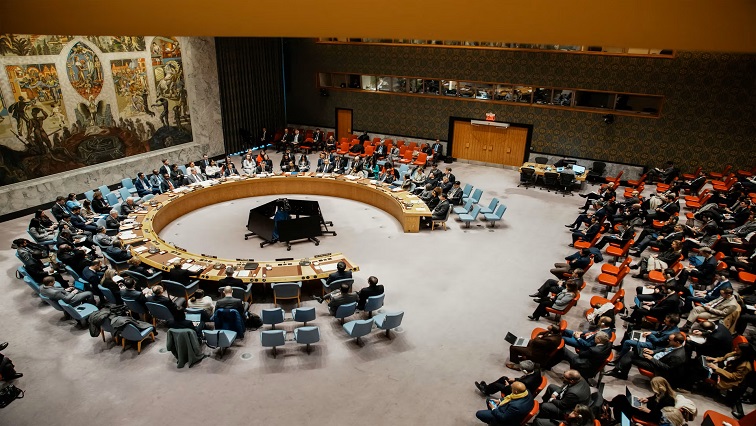
The Council marked 25 years since the September 11 attacks by reviewing a threat transformed by emerging technologies, transnational networks and uneven national capacity.
France’s Permanent Representative to the UN and Council President for September, Jérôme Bonnafont, said extremist groups were exploiting technological advances for recruitment, financing, propaganda and attack planning.
Terrorism is using “our own innovations against us”, Bonnafont said.
“Terrorists are hijacking new technologies and professionalising their propaganda methods, attracting younger recruits and harnessing new financing technologies.”
Bonnafont called on the Council to reclaim the leadership role assumed after September 11, when Resolution 1373 established the international body’s counter-terrorism framework.
The Council adopted the first presidential statement on terrorism in five years following negotiations over references to particular groups and emerging technologies.
Members called for stronger judicial cooperation, responsible governance of AI, deeper partnerships with technology companies and additional support for countries facing elevated threats.
Counter-Terrorism Committee Executive Directorate Executive Director Natalia Gherman said measures adopted after September 11 remained relevant. “In 2001, the Security Council’s response was swift and united,” Gherman said.
“Since 2001, Member States have made real progress in implementing the resolutions of the Security Council. And yet, much remains to be done. As terrorism evolves, States’ responses must adapt.”
Speaking about Africa, Democratic Republic of Congo Representative Victoria Lieta Liolocha said the Allied Democratic Forces continued to “sow death and destruction amongst civilians”.
Liolocha cited “murders, kidnappings, violence against women and children and forced displacement”.
However, Liolocha said effective international cooperation remained hampered by the absence of a universally accepted definition of terrorism. “Collective action also means that we should be able to agree on what it is that we’re fighting,” Liolocha said.
Pakistan’s Permanent Representative to the UN Asim Iftikhar Ahmad said Pakistani cooperation had contributed to international operations against Al-Qaida.
“This came with immense sacrifice,” Ahmad said, adding that terrorist violence had killed 90 000 Pakistanis and caused sustained economic damage.
Ahmad said existing sanctions were proving insufficient to address terrorism in all forms.
The Council called for commitments to be converted into action through investment in prevention, institutional resilience and capacity-building for vulnerable countries.
Members also stressed that counter-terrorism measures must comply with international law and human rights standards.
–UN/ChannelAfrica–


