
Zero Carbon Charge, known as CHARGE, launched the N3 EV Real-World Test on World EV Day to collect data from electric vehicle journeys between SA’s Johannesburg and Durban.
The test will measure range, energy consumption and charging performance while accounting for elevation, temperature, wind and driving conditions. Results will be published to help motorists and fleet operators compare vehicles. “Motorists and fleet operators want to know what range they can realistically expect on the open road, how much energy a vehicle uses between Johannesburg and Durban, and how factors such as elevation, weather and driving conditions affect performance,” CHARGE Co-Founder and Chairperson Joubert Roux said.
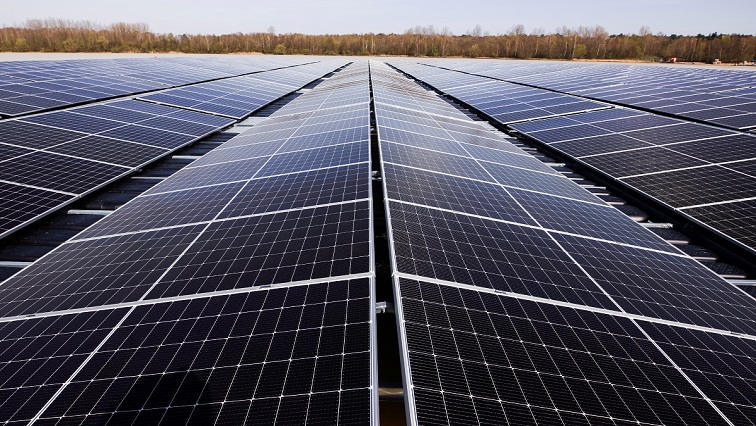
The route includes two off-grid charging hubs at Leeukop Padstal in the Free State province and Three Towers Farm Stall in the KwaZulu-Natal province. Solar microgrids and battery storage supply both facilities.
Roux said shifting from petrol and diesel vehicles to EVs could substantially reduce transport emissions if the electricity used for charging came from renewable sources. “When you migrate to electric vehicles, it makes absolute sense to also migrate to clean energy,” Roux said.
Roux acknowledged that SA’s coal-intensive electricity supply complicated the environmental case for EVs charged from the national grid. “An EV is only as green as the electricity used to charge it. That’s absolutely valid,” Roux said.
Electric vehicles were becoming more affordable, but mass adoption would also require a dependable national charging network. “The vehicles are becoming a lot more affordable. Now we need to sort out an absolutely reliable green charging network,” Roux said.
Preliminary testing of a Volvo ES90 over 185km recorded consumption of 15.7kWh per 100km while travelling downhill and 20.93kWh per 100km on the return journey. The estimated average range was 490km. “We do the test both ways to give a real-world estimation,” Roux said.
“We don’t pick the drivers. We only provide the energy. We’re crowdsourcing this information to act as one source of truth.”
Weather data will accompany each result to show how temperature and wind affect battery efficiency, range and charging speed. “Cold is actually a bigger enemy of battery performance than heat, especially in terms of charging times,” Roux said.
Participating drivers will receive charging credits and have two months after registration to complete the route.
–ChannelAfrica–