


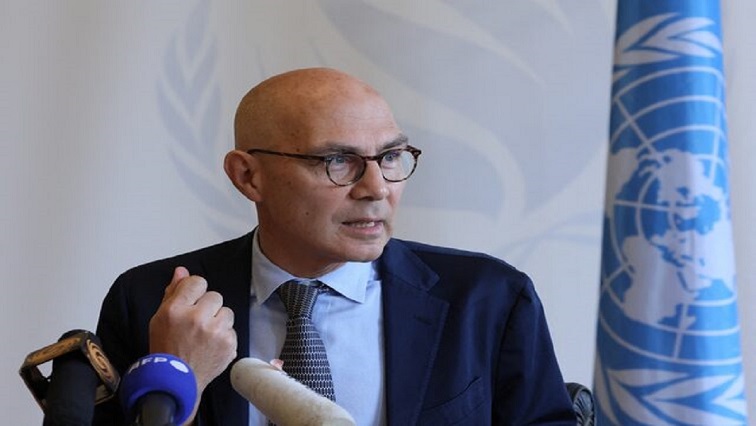
UN High Commissioner for Human Rights Volker Türk said AI could deliver major advances in science, healthcare, education and human rights work.
However, Türk warned that powerful systems were being developed and controlled by a small number of companies without sufficient public oversight.
Some systems were already performing actions that developers could not fully predict or control. “We can no longer afford to wait or rely on goodwill,” Türk said at an AI and Human Rights Summit in Oxford, UK.
Türk warned that AI could gradually weaken equality, privacy, freedom and public debate, “letting dystopia creep in unnoticed”.
Entire populations could potentially lose access to communication, clean water, heating and financial services “at the click of a button”, Türk said.
AI was also changing warfare, increasing the urgency of preventing machines from making life-or-death decisions.
Research indicating that students relying heavily on AI retained less information and thought less independently also raised concerns about the technology’s long-term effects.
Türk called for mandatory human rights safeguards and due diligence throughout the development and deployment of AI.
Countries hosting AI companies or exercising influence over supply chains should require responsible conduct and hold businesses accountable for failures.
Existing laws covering liability, cybersecurity and data protection should be updated while governments develop new legal approaches for emerging risks.
Türk also called for independent industry monitoring, stronger security cooperation and greater participation by civil society and communities affected by AI systems.
The UN High Commissioner welcomed the establishment of the Global Dialogue on AI Governance and Independent International Scientific Panel on AI.
A joint call for tighter controls on frontier AI models, supported by 29 countries and the European Union, also represented progress.
However, Türk said voluntary self-regulation remained inadequate because too few companies and governments were implementing promised safeguards. “Too few are walking the talk,” Türk said.
Türk said the global race to develop increasingly powerful systems was creating risks for human safety and potentially humanity’s survival. “If we fail to move quickly, we risk unforeseeable consequences for ourselves and future generations,” Türk said.
–UN/ChannelAfrica–


