
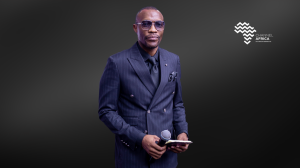

Finance Minister Enoch Godongwana said growth was expected to recover to 1.6% in 2027 and 2% by 2029. The February Budget had forecast 1.6% growth for 2026.
Middle East conflict, higher oil prices, expensive borrowing and El Niño-related risks have weakened the outlook.
Government will reduce the diesel levy by about $0.18 a litre and the petrol levy by $0.09 a litre from November 4 to December 1.
Relief will continue at lower levels until January 5, with reductions of about $0.09 a litre for diesel and $0.06 for petrol.
The measure will provide approximately $601 million in support through foregone revenue.
Debt stabilised at 78.4% of gross domestic product in 2025/26 and is expected to decline. The budget deficit is projected at 3.9% of gross domestic product in 2026/27, improving to 2.5% by 2030.
Gross tax revenue was revised upwards by approximately $1.03 billion because of stronger corporate tax, dividends tax and value-added tax collections.
Revenue is projected to rise from about $128.6 billion in 2026/27 to $152.1 billion in 2029/30.
Government will increase expenditure by approximately $2.73 billion during the current financial year.
Allocations include about $373 million for disaster relief, $49 million for military deployments supporting police operations and $31 million for three commissions of inquiry.
Around $228 million will fund more than 3 500 social workers responding to gender-based violence, while $11 million will strengthen forensic and investigative capacity.
Government identified further savings of about $2.29 billion over the medium term by reducing duplication, social-grant fraud and inefficient programmes.
Infrastructure remains central to the economic strategy. Projects supported by the Infrastructure Finance and Implementation Support Agency have a potential value exceeding $13 billion.
Fiscal support approved through the Budget Facility for Infrastructure exceeds $6 billion, while the infrastructure bond has raised more than $841 million. “We have stabilised our public finances,” Godongwana said.
“Over the next three years, our task is to turn this stability into faster growth and more jobs.”
–ChannelAfrica–





