
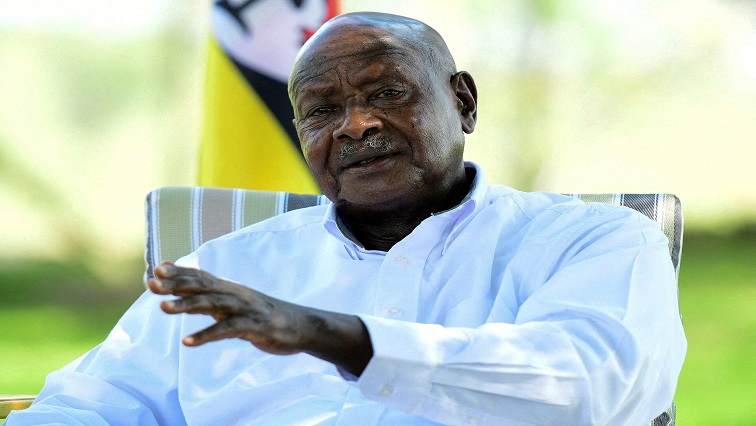
Museveni, 82, has governed Uganda since 1986 and began another five-year term after winning the January 2026 election.
Africa Briefing Founder and Africa Analyst Jonathan Offei-Ansah said succession had remained sensitive because open discussion could create competing centres of power within the National Resistance Movement (NRM). “This is a potentially defining moment in Ugandan politics because, for nearly four decades, President Museveni has been the central figure around whom the country’s political system has evolved,” Offei-Ansah said.
Growing political mobilisation around Kainerugaba has made the question increasingly difficult to avoid.
Kainerugaba serves as Chief of Defence Forces and has supporters promoting a possible presidential candidacy in 2031.
Offei-Ansah cautioned that the discussion should not be interpreted as confirmation that Museveni was preparing to retire. “It could equally be an attempt to manage growing political pressure, assess the loyalty of senior party figures and retain control over the succession process,” Offei-Ansah said.
Reports indicated that succession was discussed during an NRM Central Executive Committee meeting on October 27.
Member of Parliament Daudi Kabanda reportedly claimed that Museveni had endorsed Kainerugaba. However, no official State House statement or formal NRM resolution had confirmed an endorsement. “There is a significant difference between a President expressing a personal preference, a ruling party formally selecting a presidential candidate, and the country electing a new Head of State,” Offei-Ansah said.
Kainerugaba holds significant influence because of his military position, proximity to Museveni and support from the Patriotic League of Uganda.
Several political and security figures have also publicly backed Kainerugaba.
However, Offei-Ansah said elite endorsement did not necessarily demonstrate broad popular support.
Research published in African Affairs in 2026 reportedly found that Kainerugaba was widely regarded as the most likely successor but remained considerably less popular than Museveni. “Muhoozi has significant elite backing, but Muhoozi has not yet demonstrated the ability to independently command the broad political coalition that President Museveni has maintained for four decades,” Offei-Ansah said.
–ChannelAfrica–