
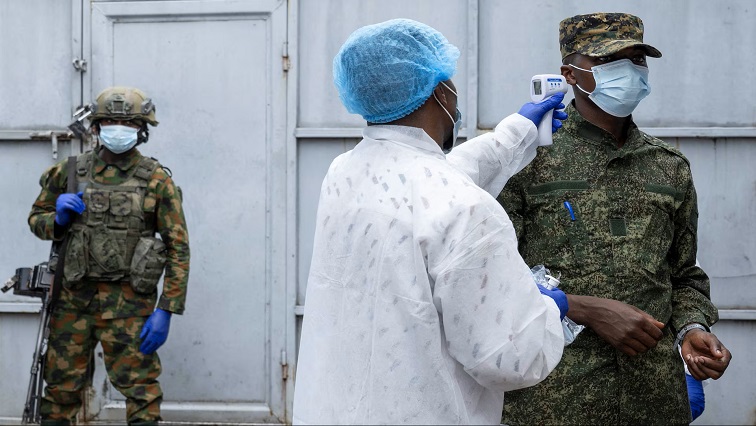
The DRC has recorded more than 10 000 confirmed infections and nearly 4 900 deaths since May.
Save the Children Country Director in the DRC Greg Ramm, said children accounted for more than one-quarter of recorded deaths. “It’s extraordinarily serious,” Ramm said. “Over 1 000 children have died of Ebola.”
Ramm said many children were simultaneously affected by malnutrition, malaria, displacement and limited access to healthcare.
During a visit to Komanda in Ituri province, Ramm observed children undergoing temperature checks and washing hands at a Save the Children-supported school.
The school serves local pupils during the morning and displaced children in the afternoon.
A nearby Ebola treatment centre had recorded the death of a child that morning, while another health centre continued treating malaria, diarrhoeal diseases and suspected Ebola infections. “It makes all the difference in the world that children can get the healthcare they need in this difficult situation,” Ramm said.
Children younger than five face particularly high mortality risks because Ebola spreads through close contact within families and communities. “If a young child gets Ebola, there is a much higher chance that the child will die,” Ramm said.
Ituri, the outbreak’s epicentre, is affected by several conflicts. More than 1 million people are displaced in the province, including approximately 500 000 children.
Displacement, overcrowding and weak healthcare infrastructure make surveillance, testing and treatment more difficult while increasing transmission risks. “The real heroes of this story are the local healthcare workers, the nurses, the doctors and the hygienists,” Ramm said.
No vaccine has been approved specifically for the Bundibugyo strain. However, early testing, rehydration and supportive treatment can improve survival prospects.
Clinical trials and vaccine-development efforts are underway.
Ramm warned that cross-border transmission into countries facing conflict, displacement and weak healthcare systems could result in wider outbreaks. “If Ebola spreads across borders into countries with very weak healthcare systems, then there is a very different problem,” Ramm said.
–ChannelAfrica–