
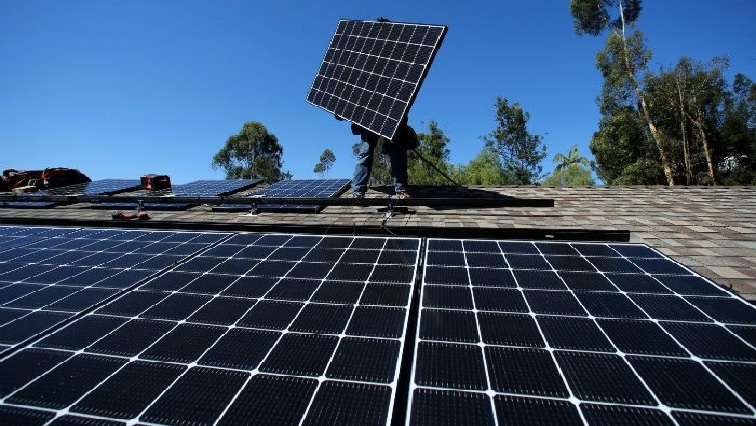
Energy and Transport Day dominated the second day of COP31 in Antalya, Türkiye, where countries examined plans to move away from coal, oil and gas.
Brazil presented a voluntary roadmap intended to translate the global commitment reached at COP28 into national transition plans.
“It’s long past time to stop treating the transition away from fossil fuels as taboo or intractable,” UN Secretary-General António Guterres said.
Guterres warned that the Middle East conflict had forced the European Union to spend more than approximately $112 billion in additional fossil-fuel import costs, while petrol and diesel prices had increased across 130 countries. “Changing suppliers will not eliminate this exposure. Disruption anywhere drives up prices everywhere,” Guterres said.
The roadmap calls on countries to assess fossil-fuel demand, production, supply and the economic consequences of transitioning to cleaner energy.
Guterres urged governments to produce national plans containing clear timelines and financing requirements and demonstrate measurable progress by 2028.
Türkiye also launched the 35-by-35 Global Electrification Pledge, which aims to increase electricity’s share of global energy consumption from slightly more than 20% to 35% by 2035.
However, inadequate electricity networks are preventing renewable-energy projects from supplying consumers.
About 2 500GW of proposed power-generation and energy projects are awaiting grid connections worldwide, according to the UN Economic Commission for Europe.
The Commission said countries needed millions of kilometres of additional transmission lines and upgrades to existing infrastructure.
High financing costs pose another obstacle, particularly for developing economies where renewable-energy projects can cost considerably more to finance than identical developments in wealthier countries.
UN University Researcher Olli-Pekka Kuusela said access to affordable capital was critical because solar and wind projects required significant initial investment.
Development banks could provide lower-interest financing to accelerate deployment, Kuusela said.
More than 500 million people in sub-Saharan Africa remain without electricity.
Kuusela said expanded renewable generation, stronger regional interconnections and climate-resilient grids could support manufacturing, public transport and essential services while reducing dependence on imported fuels.
The UN’s Global Grids Accelerator seeks to mobilise investment for electricity-network expansion and modernisation.
–UN/ChannelAfrica–