
Ramaphosa was speaking at the Sefako Makgatho Presidential Guest House in Pretoria on November 13 during the presentation of letters of credence by newly accredited Heads of Mission to SA.
Ramaphosa welcomed the diplomats on behalf of the Government and people of SA, saying their presence demonstrated the value their governments placed on relations with the country. “We stand ready to deepen our bilateral relations and to build new partnerships of mutual benefit,” Ramaphosa said.
Ramaphosa said the Heads of Mission were assuming their responsibilities at a consequential moment in international affairs, marked by heightened geopolitical competition, shifting alliances and uncertainty about the future of the international order.
Conflicts in the Middle East, Ukraine, Sudan and other parts of the world continued to exact an enormous human toll and demonstrated the cost of war and the failure of diplomacy, Ramaphosa said.
The conflicts were also disrupting global trade, undermining food and energy security and placing a heavy burden on countries such as SA.
Ramaphosa said the multilateral system, particularly the United Nations (UN), was under considerable strain. The UN’s ability to respond to global challenges had been constrained by divisions among major powers and selective adherence to international law.
“International law must apply consistently, without exception or favour,” Ramaphosa said. “The principles of the United Nations Charter must be respected by all nations, whatever their economic or military power.”
Ramaphosa said a stable international order could not be built on selective justice, unilateralism or the belief that might makes right.
SA would continue to support dialogue, the peaceful resolution of disputes, the protection of civilians and respect for human rights. “The answer to the crisis facing multilateralism is not less multilateralism, but better, more representative and more effective multilateralism,” Ramaphosa said.
Ramaphosa said SA’s foreign policy was anchored in the values of the Constitution, which marked its 30th anniversary in 2026. These included human dignity, equality, non-racialism, non-sexism, freedom and justice.
Ramaphosa said SA’s struggle against apartheid had demonstrated that freedom and dignity could not be applied selectively. The struggle had also shown the importance of international solidarity in overcoming injustice.
SA sought constructive relations with all countries, irrespective of their political systems or economic models, with those relations guided by mutual respect, equality and shared interests.
Ramaphosa quoted former President Nelson Mandela’s 1998 address to the Mercosur Heads of State Summit in Argentina, where Mandela said: “The challenges of development and peace are beyond the capacity of any one nation to solve.”
Ramaphosa said Mandela’s words remained relevant because challenges facing humanity required countries to engage across political, ideological and geographical divides.
Africa remained at the centre of SA’s foreign policy, Ramaphosa said.
SA assumed the Chairpersonship of the Southern African Development Community for 2026 and 2027 in August. Ramaphosa said the country’s focus was on regional industrialisation, infrastructure development, agricultural transformation and food security.
SA was also determined to expand the beneficiation of critical minerals. “Africa must move beyond being a supplier of raw materials to become a centre of production, innovation and value addition,” Ramaphosa said.
The President invited the newly accredited Heads of Mission to work with SA through investment, technology transfer, skills development, infrastructure financing and trade.
SA’s vision was of a peaceful, integrated and prosperous Africa that determined its own development path in line with the African Union’s (AU) Agenda 2063.
Ramaphosa said SA would continue using BRICS, the G20, the UN and other international platforms to advocate for reform of the global governance system.
The UN Security Council and international financial institutions needed to reflect the realities of the modern world, Ramaphosa said. “We firmly believe that Africa deserves a permanent voice in the institutions that maintain international peace and shape the global economy,” Ramaphosa said.
As the first African country to hold the G20 Presidency, SA would continue promoting inclusive growth, debt sustainability, climate justice and food security.
Ramaphosa said opportunities presented by artificial intelligence, digitalisation and the just energy transition had to be shared among all countries. “No nation should be left behind in shaping or benefiting from the future global economy,” Ramaphosa said.
The strength of relations between countries should be measured by the tangible benefits delivered to their people, according to Ramaphosa.
Ramaphosa encouraged the Heads of Mission to work closely with the Department of International Relations and Cooperation to identify practical areas of cooperation.
SA particularly welcomed partnerships supporting economic growth, industrial development, employment and skills development. Ramaphosa also encouraged the diplomats to engage with provincial and local governments, universities, research institutions and the private sector. “Diplomacy must create opportunities, build bridges between societies and improve the lives of ordinary citizens,” Ramaphosa said.
Ramaphosa assured the Heads of Mission of the Government’s support and cooperation as the diplomats began their assignments.
Ramaphosa described SA as a country with remarkable diversity, a rich heritage and immense potential. The President said the Government hoped the diplomats would experience the warmth of South Africans and gain an understanding of the country’s democratic journey and aspirations.
In return, SA looked forward to learning more about the countries, people and aspirations represented by the diplomats. “May your tenure in our country be successful. May it bring our nations closer together. And may the relations between our respective countries grow from strength to strength,” Ramaphosa said.
–ChannelAfrica–
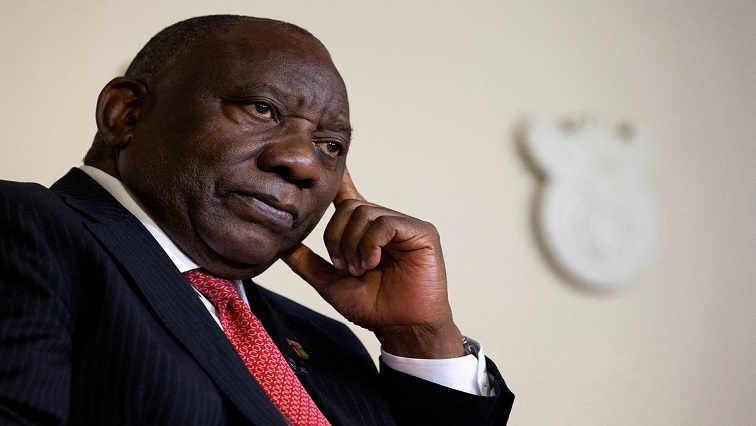
Image: Reuters





