
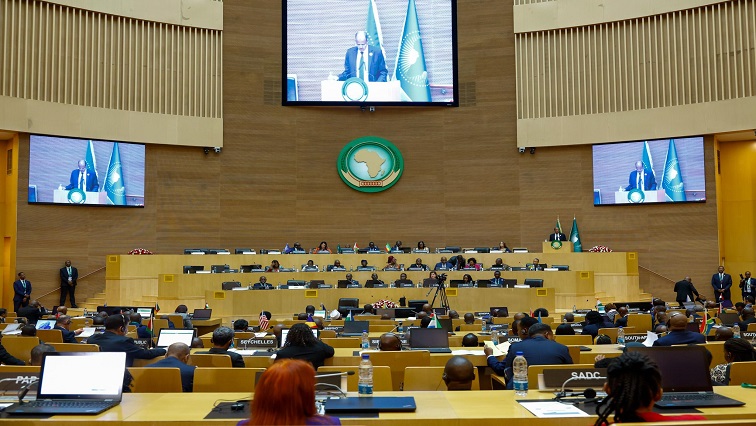
African Union (AU) Health Ministers opened talks in Angola, Luanda this Friday with a clear warning that fragmented policies are holding back progress, urging member states to pool efforts, secure sustainable funding, and deliver tangible improvements in healthcare across the continent.
The ministerial session of the Sixth Ordinary Session of the AU Specialised Technical Committee on Health, Nutrition, Population and Drug Control follows three days of expert deliberations. It brings together AU member states, the AU Commission, regional economic communities, and partners under the theme Breaking the Silos: Strengthening Integrated Health, Nutrition, Population and Drug Control Systems to Advance Human Capital and Social Resilience in Africa.
Opening the floor, AU Commission Commissioner Amma Twum-Amoah, who oversees health, humanitarian affairs, and social development, pressed governments to move from pledges to measurable progress in maternal and child health, immunisation, nutrition, and disease control. She pointed to milestones such as the Accra Declaration, AU Roadmap 2030 and Beyond, the Africa Centres for Disease Control and Prevention (Africa CDC), and the African Medicines Agency, laying out four priorities: stronger primary care, higher domestic health and nutrition budgets, better data and accountability, and greater African capacity to finance, regulate, and manufacture essential medicines.
Angola’s Health Minister, Sílvia Paula Valentim Lutucuta, who takes over as committee chair, argued that joined-up work should make individual mandates sharper, not weaker. ‘Breaking silos does not mean diluting mandates. It means coordinating them more effectively, setting common priorities, sharing information across systems and measuring results by their real impact on people’s lives,’ she said. Lutucuta pointed to Angola’s own expansion, hiring over 46 000 health workers between 2017 and 2024 and growing its health facilities from 2 612 to 3 356, alongside gains in cutting maternal and child deaths.
Speaking for the outgoing leadership, Zimbabwe’s Health and Child Care Minister Douglas Mombeshora reminded delegates that policies only matter if they improve everyday care, immunisation, drug prevention, and health system resilience, urging deeper African ownership and shared responsibility. The newly elected Bureau puts Angola in the chair for Southern Africa, with Liberia as First Vice-Chair (West), Gabon as Third Vice-Chair (Central), and Tanzania as Rapporteur (East), while leaving the Northern Africa Second Vice-Chair spot deferred.
Delegates are weighing the experts’ report alongside major continental plans, from health financing options and the Africa CDC Immunisation Strategy 2026–2030 to new nutrition frameworks for 2026–2035, a review of the 2019–2025 AU drug control action plan, a proposed drug control and crime prevention strategy, and a pan-African network tracking drug use.
On the sidelines, Angola voiced solidarity with the Democratic Republic of the Congo over its Ebola outbreak, citing tighter border health checks and pledging $5 million to Africa CDC as the AU Commission restated its push toward Agenda 2063 health targets.
–ChanenlAfrica/AU–