The elections were scheduled for December, 15 years after South Sudan gained independence in 2011. The latest delay follows several previous postponements and comes amid renewed tensions, the dissolution of the transitional unity government and the continuing trial of opposition leader Riek Machar.
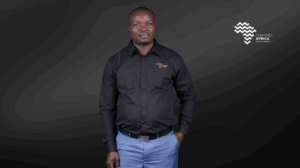
Speaking to Channel Africa this week, South Sudanese Human Rights Activist and Former Lawmaker Animu Amitai said the repeated delays demonstrated a lack of political will to end the country’s prolonged transition. “The continued postponement of South Sudanese elections really boils down to one thing,” Amitai said. “It is a lack of goodwill, good faith and political will to make sure that South Sudan comes out of transition.”
South Sudan was initially expected to hold elections in 2015. The elections were later scheduled for 2023 and subsequently moved to 2024 and 2026. Amitai said the National Elections Commission announced the latest postponement about 40 days before the scheduled vote without consulting political parties.
Amitai also questioned the legal basis for the postponement, saying the decision was not anchored in the National Elections Act or the Constitution. Amitai rejected logistics as the principal reason for the repeated delays, arguing that the Government had previously demonstrated the ability to organise major events within short periods when sufficient political commitment existed.
“The postponement has nothing to do with logistics,” Amitai said. “Logistics have continually been used as an excuse not to have a genuine process.”
Amitai cited the 2023 ecumenical visit by Pope Francis, the Archbishop of Canterbury and the Moderator of the Presbyterian Church as an example. Preparations, including infrastructure work, were completed within three months, according to Amitai. “That shows that when the political leadership is willing to do something, no logistics are going to stand in the way,” Amitai said.
Amitai accused the political leadership of seeking to extend its time in power and said citizens wanted an opportunity to choose representatives. The continued detention and trial of Machar had further raised concerns about whether the elections could be inclusive.
Machar has been under house arrest since March 2025 and faces charges including treason and murder, which Machar denies. Machar’s political faction has made the opposition leader’s release a condition for participating in political dialogue.
Amitai said political restrictions extended beyond Machar and affected other opposition leaders following the dissolution of the transitional unity government on September 22.
Opposition figures were unable to travel freely to their home states or campaign in different parts of the country, while members of the ruling Sudan People’s Liberation Movement faced fewer restrictions, Amitai said. “There is no clarity on when the election timetable will take place, and there are legal ambiguities,” Amitai said.
The Former Lawmaker also questioned whether credible dispute-resolution mechanisms could be established under the current conditions.
Children in Panyijiar and Akobo, areas described by Amitai as opposition strongholds, had been unable to sit national primary school examinations. “How is it possible to have something as contentious as an election and make it inclusive when something as simple as examinations is not possible?” Amitai said.
Amitai called for the National Elections Commission to be adequately financed using South Sudan’s resources. Voter registration began on November 14, but funding shortages continued to hinder election preparations, according to Amitai. “The National Elections Commission needs to be adequately resourced from South Sudanese resources so that people can take this process seriously,” Amitai said.
The Human Rights Activist said the election process should be nationally owned and led by the Government. Opposition leaders had also demanded that the Commission explain the legal basis for extending the election date to February 11, 2027, and consult political stakeholders before proceeding.
Amitai said citizens and opposition parties had little confidence that the February election would take place.
The political uncertainty has compounded economic hardship, displacement and insecurity affecting South Sudanese communities. Amitai said civil servants had not received salaries for more than two years, while many people could not afford basic necessities.
The country was also facing an influx of refugees from Sudan, reduced international humanitarian assistance and the threat of an Ebola outbreak. “You cannot even begin to imagine the compounded vulnerability that the ordinary citizen is facing,” Amitai said.
Amitai said people in urban areas were living from day to day despite being regarded as relatively privileged compared with rural communities that had limited access to services and assistance. “If people in urban areas continue to face these difficulties to such extreme magnitudes, how about those in the villages?” Amitai said.
–ChannelAfrica–