
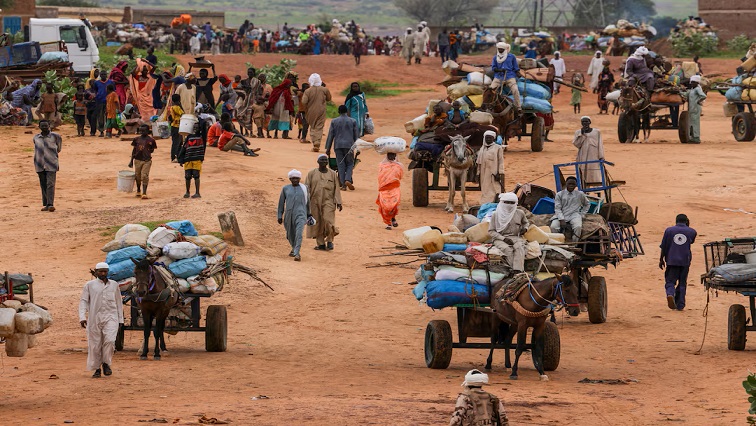
A further 15 310 people fled homes during 21 displacement incidents recorded across Kordofan in November.
The International Organisation for Migration (IOM) said nearly 90% of the latest displacement originated in West Kordofan.
About 12 720 people were forced to flee Abu Zabad locality alone.
“Families across Kordofan are being forced to flee time and again, while the communities taking them in are already struggling to meet basic needs,” IOM Chief of Mission in Sudan Mohamed Refaat said.
Repeated displacement had exhausted families’ limited resources and disrupted access to healthcare, education and other essential services.
The organisation said increasing numbers of displaced people were seeking safety in North Kordofan, White Nile and Khartoum, placing further pressure on host communities and overstretched public services.
Humanitarian conditions were particularly severe in West Kordofan, where 70% of households surveyed during the 2026 Multi-Sector Needs Assessment reported protection needs.
Access to healthcare and education remained severely restricted.
Across Sudan, 38% of surveyed households reported unmet shelter needs.
The agency said repeated displacement, damaged homes and the loss of essential belongings had left many families without adequate or safe accommodation.
“Civilians must be protected,” Refaat said.
“As more people are forced from their homes, we urgently need the resources and safe access to reach them before their situation deteriorates even further.”
The IOM continues monitoring population movements across Kordofan and other conflict-affected areas through the Displacement Tracking Matrix.
The information is used to identify emerging needs and guide the delivery of emergency shelter, household items and other essential assistance.
The organisation called for civilians and civilian infrastructure to be protected and for humanitarian organisations to receive safe and unrestricted access to affected communities.
The IOM also appealed for urgent additional funding, warning that thousands more families could be left without lifesaving assistance as insecurity continued.
–IOM/ChannelAfrica–