


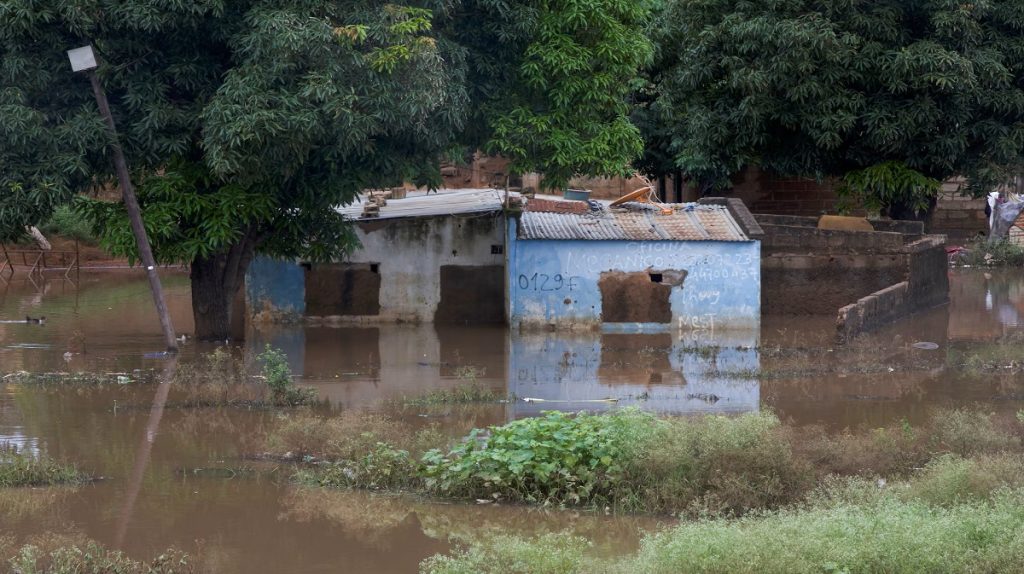
The rollout comes as the country confronts some of the worst flooding in its recent history. Working alongside Korean technical experts, government-trained Mozambican teams have begun flying drones fitted with high-resolution cameras to capture real-time images of flood-hit communities.
The aerial system uses artificial intelligence to help locate people in need of rescue, map damaged infrastructure, and stream live video feeds directly to emergency command centres. The images are processed into digital maps that assist responders in planning access routes, prioritising evacuations, assessing damage, and monitoring high-risk areas as conditions shift.
The drone missions form part of the Drone-Based Disaster Management Project, launched in April 2025 by the AfDB Group, the Government of Mozambique and Busan Techno Park (BTP). The initiative established a drone training centre and expanded drone-based monitoring and emergency response capacity across five flood-prone zones.
Although the current emergency phase had originally been scheduled to begin in March 2026, the Mozambican government requested that it be brought forward in response to the scale of the crisis.
This week, a joint response team made up of government officials and Korean specialists began drone flights in Gaza Province, covering districts including Chókwè and Guijá. Their priority is to identify stranded residents and transmit their locations in real time to emergency coordinators, particularly in areas where flooding has cut off road access and made ground operations difficult.
Official figures indicate that 692 522 people were affected and 12 deaths were recorded between January 9 and January 26, while flooding damaged 1 336 km of roads and forced authorities to postpone the start of the school year to February 27.
The broader impact has also raised alarms about livelihoods and food security, with more than 34 000 livestock reportedly lost and over 100 000 hectares of farmland destroyed.
Gaza Province has been the hardest hit. The provincial capital, Xai-Xai, is said to be largely submerged, while widespread damage to roads and bridges has isolated communities and slowed the movement of rescue teams and supplies.
Drone operations began after high-level coordination meetings held on January 26, 2026, involving Mozambican government representatives, AfDB officials and a Korean technical team.
Mozambique’s Minister of Communications and Digital Transformation, Américo Muchanga, described the deployment as a significant step in strengthening the country’s disaster-response capability.
“This initiative represents a pivotal moment in our national strategy as we develop a skilled national workforce capable of leading disaster response with confidence and autonomy,” he said. “By putting this technology into action, Mozambique is ensuring it can better protect its communities during the most severe climate-driven emergencies.”
To embed the programme within Mozambique’s emergency response network, the project has donated nine drones, four training drones and five operational ‘solution’ drones, to support surveillance and rapid assessment as environmental risks evolve.
Twenty Mozambicans, including disaster management personnel and members of the security forces, have completed training and are now conducting missions alongside Korean specialists.
Rômulo Corrêa, the AfDB’s Resident Representative in Mozambique, said the goal was to reduce response times and improve access to reliable information during fast-moving emergencies.
“The Bank is deeply engaged at this critical moment to help ease immediate suffering,” he said. “By moving from training into active drone operations, we are delivering real-time data that shortens response times and connects isolated communities with urgent assistance. In the longer term, this approach will also strengthen Mozambique’s resilience to future disasters.”
Kim Hyeong-kyun, President of Busan Technopark, said the operation illustrated how technology-driven cooperation could translate into immediate lifesaving action in a crisis, adding that BTP intended to continue supporting international partnerships focused on public responsibility and innovation.
–AfDB/ChannelAfrica–


