
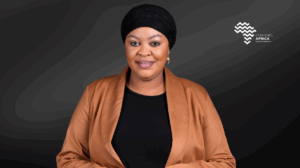
Former Deputy Chief of Staff and Senior AU Strategy Adviser Ambassador Febe Potgieter‑Gqubule says the agenda was conceived to bring coherence to Africa’s many policy frameworks and set a practical roadmap for the next 50 years.
Speaking to Channel Africa on Monday, Potgieter‑Gqubule said Agenda 2063 was agreed during the AU’s 50th anniversary celebrations in May 2013, when leaders reflected on progress since 1963. The OAU’s defining mission was the completion of decolonisation, largely achieved by 1994, with Western Sahara remaining unresolved. “We had adopted a range of frameworks over time, but the question became how to bring them together in a coherent programme for the next 50 years,” she said.
In practical terms, she described the vision as an Africa that is peaceful, united, democratic and prosperous, and able to “take its rightful place in the world”. Peace, she argued, is not only a moral imperative but an economic necessity, with conflicts raising fuel and food prices even for countries far from the battlefield. Integration is also central, building on ideas in the Lagos Plan of Action and Abuja Treaty, which position regional cooperation as critical to development and resilience.
However, she acknowledged persistent obstacles to delivery. One is the continued attachment to narrow national sovereignty, despite colonial-era borders and evidence that regional integration strengthens competitiveness.
Another is what she called a deficit of self-confidence, where countries benchmark mainly against other regions while failing to learn from African success stories in areas such as technology innovation and the creative industries. Leadership and political will, she said, remain decisive.
As geopolitical tensions and global economic uncertainty increase, Potgieter‑Gqubule said Agenda 2063 offers a pathway to greater self-reliance through deliberate investment in infrastructure, industrialisation, agriculture, human capital and democratic governance. She emphasised that Africa’s demographic advantage is strategic: by 2050, about a quarter of the world’s population will be African, still predominantly young, while much of the world ages.
Above all, she said, the agenda requires consistency and urgency. “We need to be intentional about African development, strengthen our democracy, and silence the guns,” she said.
–ChannelAfrica–





