


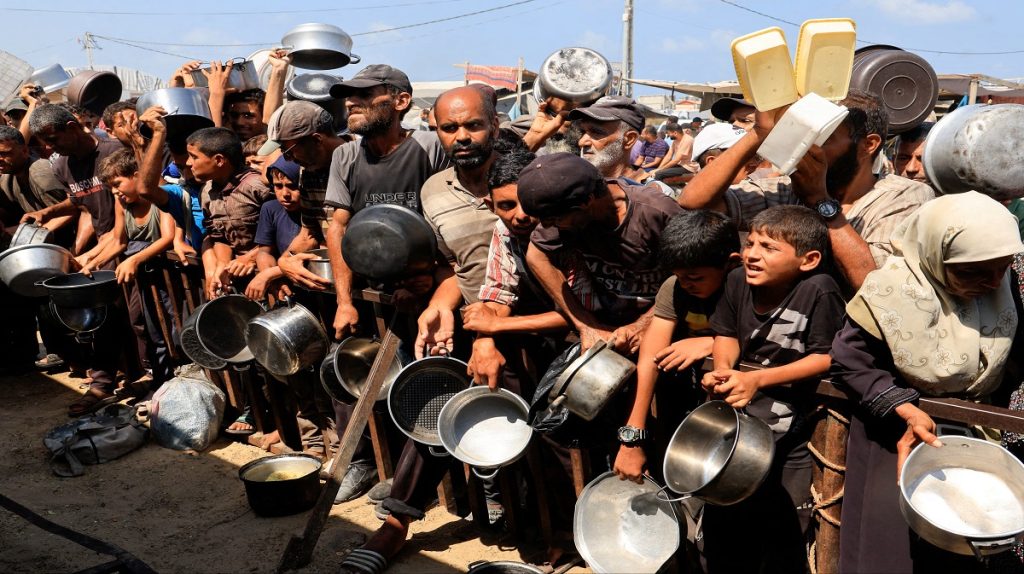
This is as winter storms worsen already dire living conditions for displaced families.
OCHA said needs across the Gaza Strip continue to rise faster than relief agencies are able to respond, despite sustained efforts by the UN and its partners. Flooding caused by repeated winter storms has destroyed shelters and personal belongings, leaving large numbers of people exposed to the cold.
An estimated 1.3 million people are currently in need of shelter assistance. Aid agencies have prioritised emergency winterisation, including the distribution of tents, tarpaulins and bedding.
Over the past few days, humanitarian teams have distributed about 3 800 tents, more than 4 500 tarpaulins and thousands of bedding items, supporting around 4 800 families. Assistance has also included plastic sheeting, cooking sets and short-term food aid to help households cope after flooding swept through displacement sites.
Local authorities have identified some flood-prone areas as unsafe, prompting several hundred families to relocate voluntarily. The UN and partner organisations have supported these moves by preparing and levelling new sites and installing tents to ensure minimum safety and dignity standards.
Health risks linked to winter conditions are growing, particularly for infants. Aid workers have warned that the risk of hypothermia is high, especially among babies, and have been providing guidance to caregivers on measures such as body-to-body contact to help keep children warm.
Beyond shelter support, humanitarian operations include food assistance, nutrition screening and health services. Education efforts are also continuing, with 13 additional temporary learning spaces recently reopened, allowing about 5 000 children to return to learning.
OCHA highlighted persistent operational constraints, including limited entry points into Gaza, restricted transport routes inside the territory, and delays at crossings. Humanitarian cargo is often deprioritised, while some critical items such as heavy machinery, spare parts and infrastructure repair equipment remain blocked.
Aid agencies stress that these impediments must be lifted urgently, warning that without faster and more predictable access, humanitarian needs will continue to outpace the response.
–UN/ChannelAfrica–


