

But Regional Analyst Stephanie Wolters cautions that the deal remains fragile and depends on difficult political and military concessions that neither side appears ready to make.
The agreement, mediated by Qatar with support from the United States, includes progress on two issues that had stalled previous rounds of talks: modalities for a prisoner exchange and a verification mechanism to monitor a future disarmament, demobilisation and reintegration process for M23 combatants.
Wolters, a Senior Research Fellow at the South African Institute of International Affairs and Director of Okapi Consulting, told Channel Africa, on Monday, that simply keeping Kinshasa and the M23 engaged in dialogue while fighting continues on the ground is an achievement in itself. However, she warned that the heart of the conflict lies in the M23’s continued control of key urban centres.
“Since the beginning of this year, M23 has controlled Goma and Bukavu and has effectively established parallel administrations. This goes further than at any point in the last four years and shows entrenched interests,” she explained. Any credible agreement, she added, must address how, and at what pace, the DRC government can re-establish state authority in territories now held by the rebels.
Wolters highlighted that the M23’s demands align closely with the interests of Rwanda, which she said maintains roughly 4 000 troops in eastern DRC despite official denials. “The key question is whether Rwanda is willing to withdraw its forces and give up its longstanding influence in eastern DRC,” she said.
The Doha process is running in parallel with US-mediated talks between Kigali and Kinshasa in Washington. Progress in one arena directly affects the other, but a major obstacle remains: who will act first? Rwanda wants Kinshasa to cut ties with the Democratic Forces for the Liberation of Rwanda, while the DRC insists Rwanda must halt its support for M23.
Wolters also criticised the limited role of the African Union, saying its engagement has been “very lacklustre” despite the scale and duration of the conflict.
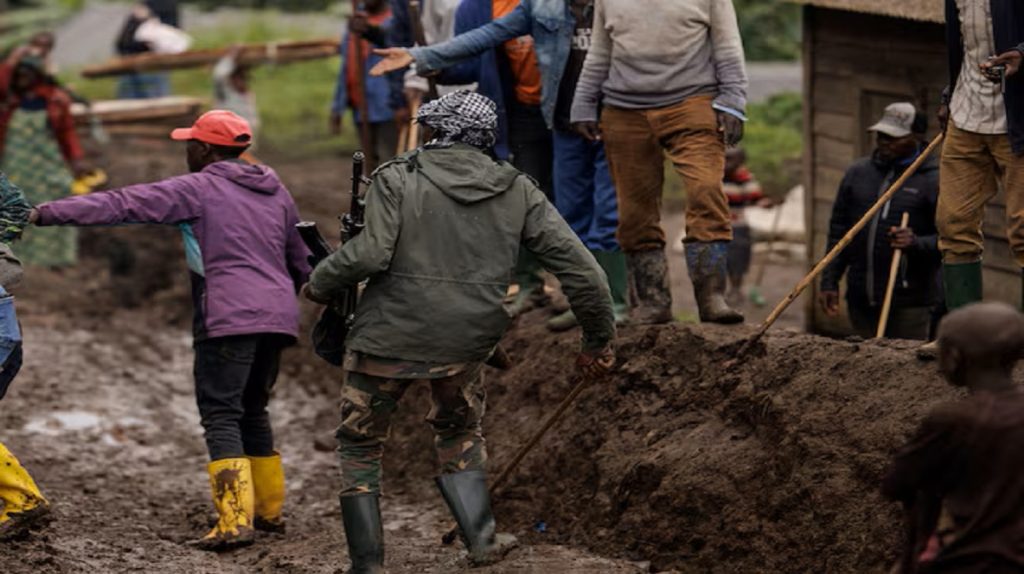
With eight protocols still to be negotiated and only two finalised, she warned that a lasting settlement remains distant. “We are still a long way from seeing an end to the violence,” she said, noting ongoing displacement and worsening humanitarian conditions in eastern DRC.
–ChannelAfrica–


