


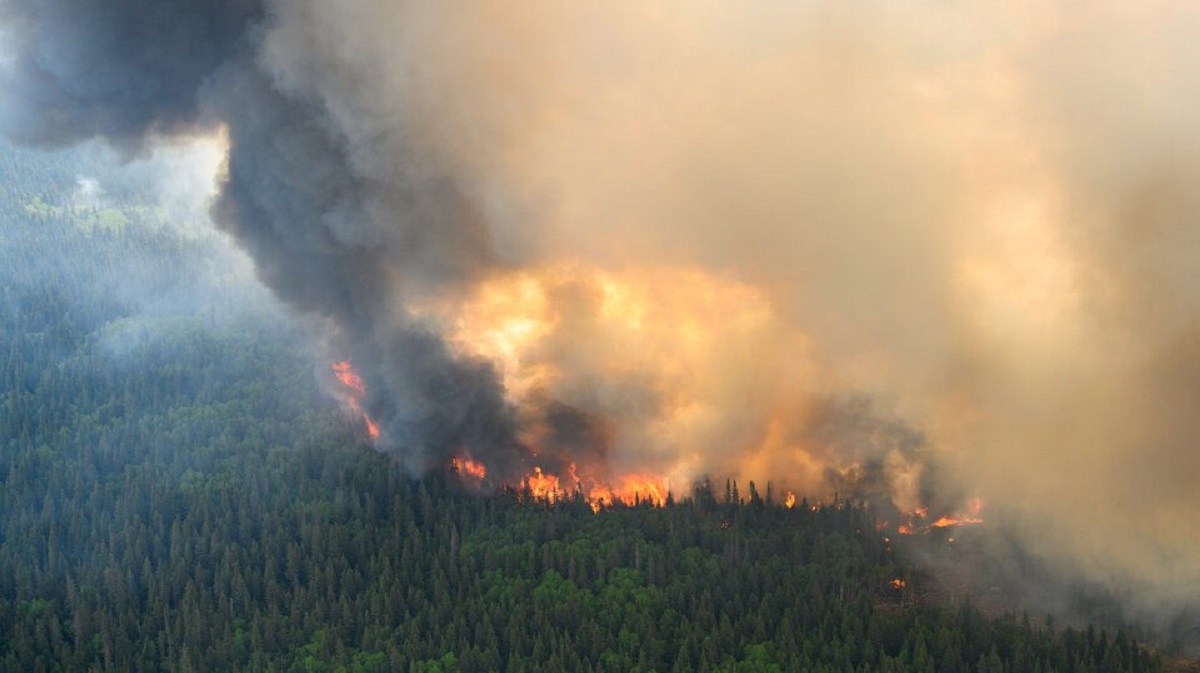
The agency’s latest Greenhouse Gas Bulletin revealed that CO₂ concentrations rose by 3.5 parts per million (ppm) between 2023 and 2024, a record leap that pushed global averages to 423.9 ppm. The rise was fuelled by ongoing fossil fuel emissions, intensified wildfires, and a decline in the ability of land and oceans to absorb carbon dioxide.
WMO scientists warned that the weakening of these natural “sinks” could trigger a self-reinforcing cycle of warming. “There is concern that terrestrial and ocean CO₂ sinks are becoming less effective, which will increase the amount of CO₂ that stays in the atmosphere, thereby accelerating global warming,” said Oksana Tarasova, the organisation’s Senior Scientific Officer.
According to the report, CO₂ growth rates have tripled since the 1960s, from 0.8 ppm per year to an average of 2.4 ppm between 2011 and 2020. The 2024 spike came during the warmest year on record, amplified by a strong El Niño weather pattern that reduced carbon uptake by forests and oceans.
Methane and nitrous oxide, the second and third most significant long-lived greenhouse gases, also hit record highs. Methane reached 1 942 parts per billion (ppb), 166% above pre-industrial levels, while nitrous oxide rose to 338 ppb, a 25% increase.
“The heat trapped by CO₂ and other greenhouse gases is turbo-charging our climate and leading to more extreme weather,” said WMO Deputy Secretary-General Ko Barrett. “Reducing emissions is therefore essential not just for our climate but also for our economic security and community well-being.”
The WMO warned that without swift and sustained emission cuts, the world risks crossing critical climate thresholds. It called for expanded global monitoring systems to improve understanding of greenhouse gas dynamics and guide policy responses.
The report was released ahead of the COP30 climate summit scheduled for November in Belém, Brazil, where countries are expected to present updated strategies for meeting global emission targets.
–UN/ChannelAfrica–


