
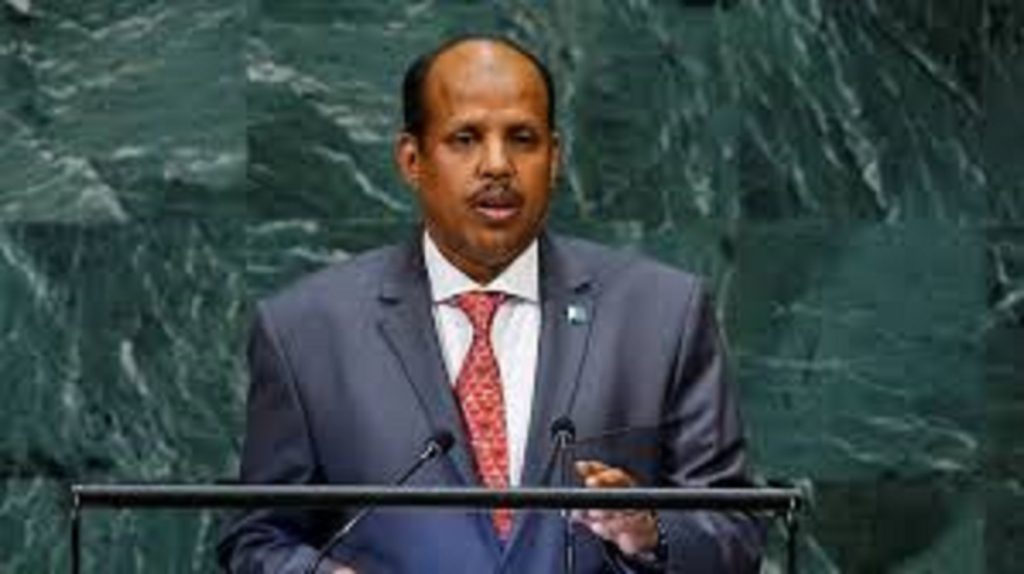
AU Chairperson Mahmoud Ali Youssouf made the call during a high-level event at the third Russia-Africa Summit in Moscow.
The event, titled “Russia-Africa Agro-Industrial Alliance: Meeting the Challenges Together”, was organised in partnership with the Russian Association of Fertiliser Producers.
Youssouf said Africa possessed extensive arable land and significant water resources but continued to underuse the continent’s agricultural potential.
Only 6% of Africa’s arable land is irrigated, leaving agricultural production heavily exposed to changing rainfall, drought and other climate-related shocks.
The continent imports approximately $100 billion in food annually, including rice, maize, wheat and edible oils.
Youssouf said addressing the imbalance required structural transformation across Africa’s agricultural sector.
Priorities should include expanding irrigation infrastructure, improving access to fertilisers and strengthening domestic production.
African countries should also invest in agricultural research, technology transfer and skills development to improve productivity and reduce reliance on imported food.
Developing regional and national value chains could let African economies process more agricultural products locally, increase domestic food supplies, and create jobs.
Youssouf said Russia could contribute to Africa’s agricultural transformation through investment, cooperation and the transfer of technology and technical expertise.
Stronger engagement with Russian businesses and agricultural companies could help develop farming infrastructure and improve local productive capacity.
However, Youssouf stressed that cooperation should support Africa’s ability to build sustainable domestic industries rather than deepen external dependence.
The continent should use natural resources, agricultural land and human capacity to produce more food and retain greater value within African economies.
Higher domestic production could improve food security, reduce exposure to international supply disruptions and lower the cost of importing essential products.
Youssouf said sustainable food security ultimately depends on Africa developing agricultural systems that can supply domestic markets and support regional trade.
–AU/ChannelAfrica–