


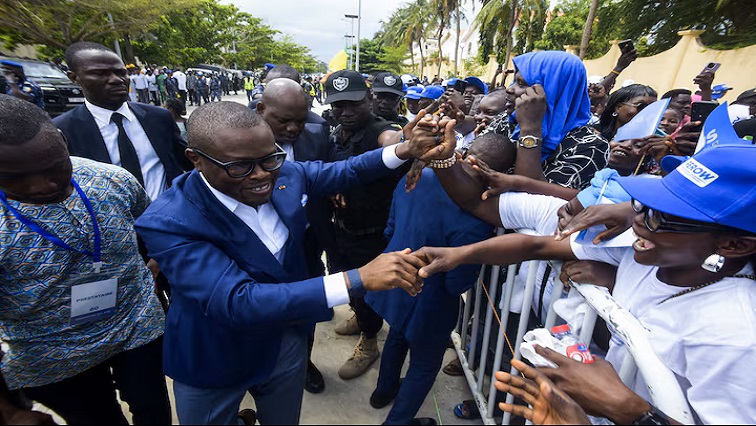
Benin’s newly sworn-in President Romuald Wadagni has signaled a potential shift in West African geopolitics after drawing senior delegations from the Alliance of Sahel States (AES), Mali, Burkina Faso, and Niger, to his inauguration on Sunday.
According to Beninese geopolitical researcher and author Morgan Assogba Metondji, the presence of the military-led AES regimes at the ceremony highlights a realistic effort by Benin to repair broken regional ties. This diplomatic outreach is aimed at fostering vital anti-terror co-operation to protect investments and secure Benin’s northern borders against Sahel-linked armed groups, while simultaneously complementing broader integration through the Economic Community of West African States.
Wadagni assumed office after securing a commanding 94% of the vote in the April 12 election. Widely regarded as a continuity candidate, Wadagni inherits an economy that achieved steady growth and rigorous fiscal reforms under his predecessor, Patrice Talon.
According to Metondji, Wadagni’s domestic agenda is locked into a three-pronged strategy prioritising heightened security, rapid agricultural industrialization, and aggressive poverty reduction.
Despite Benin posting strong macroeconomic growth figures over recent years, Metondji acknowledged that the wealth has failed to trickle down, stating that a clear gap remains between positive state balance sheets and the daily living conditions of ordinary citizens. In response, the new President has explicitly categorised the eradication of extreme poverty as a core objective of his administration.
Addressing long-standing international scrutiny over the erosion of democratic pluralism under the previous establishment, Metondji argued that the decline cannot be blamed entirely on the state. He noted that the domestic opposition landscape has become heavily fragmented and weakened due to several prominent opposition figures choosing to either exit politics entirely or merge into parties aligned with the government.
Wadagni’s Presidency begins at a critical juncture as Cotonou attempts to position the country as an attractive, fast-emerging destination for international investors while balancing delicate security dilemmas and complex regional diplomacy.
–ChannelAfrica–


