

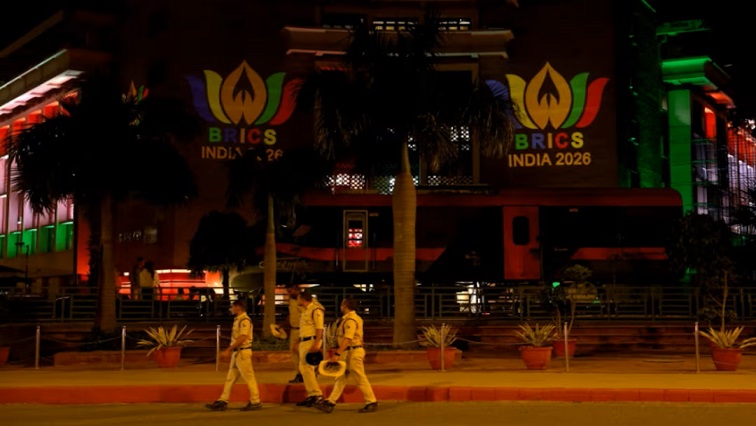
BRICS, an international organisation currently comprising ten countries: Brazil, China, Egypt, Ethiopia, India, Indonesia, Iran, Russia, South Africa (SA) and the United Arab Emirates (UAE).
Leaders of the 11-member bloc have arrived in India ahead of the summit, taking place from 12 to 13 September. SA President Cyril Ramaphosa and Russian President Vladimir Putin are among the leaders attending.
Chinese President Xi Jinping’s expected visit to India will also draw attention, marking the first visit by Xi to the country since 2019.
Speaking to Channel Africa on Friday, Dr Samir Bhattacharya, a Fellow at the Observer Research Foundation in New Delhi, said India and China were likely to prioritise economic cooperation rather than their longstanding border dispute.
Bhattacharya said the two countries recognised the need for joint efforts on economic and development issues despite differences.
Putin’s attendance is also expected to provide Russia with an opportunity to demonstrate continued support from countries in the Global South, according to Bhattacharya.
Bhattacharya said Russia remained affected by sanctions imposed by the United States and its allies but argued that describing Russia as completely isolated would be an overstatement.
The wars involving BRICS members, particularly Iran, are expected to present a challenge for the bloc.
Iran’s membership places BRICS in a difficult position because member states have different relationships with countries involved in the Middle East conflict. Bhattacharya said India maintains strong relations with both Iran and Israel, while the UAE, Egypt and Ethiopia also have differing interests.
Bhattacharya said BRICS could call for an end to the conflict but had limited ability to enforce such a position because the bloc was primarily an economic grouping rather than a security organisation.
Economic challenges are therefore expected to remain central to the summit, including health, digital infrastructure, connectivity, energy and development financing.
Bhattacharya said BRICS could also strengthen South-South cooperation through its New Development Bank, particularly as developing countries face tighter access to financing from traditional institutions and reductions in foreign aid.
The expert said India was seeking to position BRICS as a platform connecting the Global South with the Global North rather than deepening global divisions.
On the possibility of BRICS pressuring Iran over disruptions affecting shipping and energy supplies, Bhattacharya said direct pressure was unlikely to be effective.
Instead, BRICS members could seek concessions to protect shipping, oil and gas supplies while calling for an end to the conflict.
–ChannelAfrica–


