


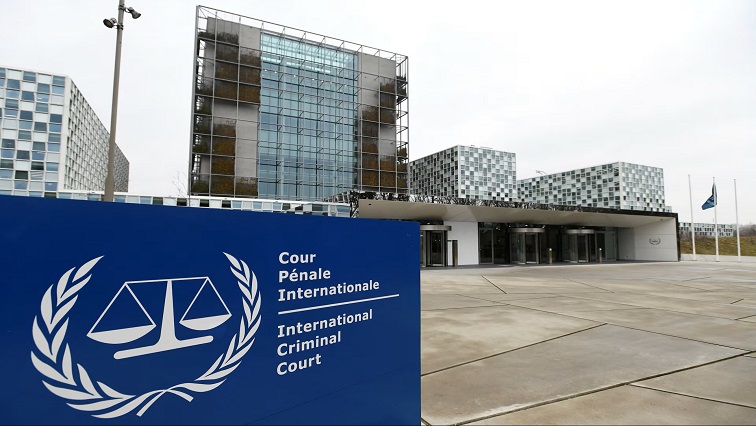
Chad has become the latest country to announce plans to withdraw from the ICC, joining Burkina Faso, Mali and Niger in questioning the legitimacy of the Hague-based tribunal.
The military government has accused the ICC of “limited effectiveness” and of disproportionately targeting African countries, arguing that many of the court’s investigations have focused on the continent.
Africa Analyst and Africa Briefing Publisher Jonathan Offei-Ansah said Chad’s criticism reflects concerns that have long shaped Africa’s relationship with the ICC. “There is a legitimate criticism at the heart of Chad’s arguments,” Offei-Ansah said.
Speaking to Channel Africa on Tuesday, Offei-Ansah said the ICC’s record has been disproportionately African, especially during its first two decades, while alleged crimes involving powerful Western countries and allies often appear to receive less urgent attention. “The imbalance has damaged confidence in the court and reinforced the belief that international justice is more easily imposed on weaker states,” Offei-Ansah said.
However, Offei-Ansah said that criticism does not automatically justify Chad’s withdrawal.“A government cannot simply point to double standards elsewhere and conclude that its own officials should no longer face external scrutiny. Selective justice is a problem, but the alternative cannot be no justice,” Offei-Ansah said.
Offei-Ansah noted that several African cases reached the ICC through referrals by African governments, including Uganda, the Democratic Republic of Congo, the Central African Republic and Mali. “The real question, therefore, is whether Chad wants a fairer system of justice or less accountability,” Offei-Ansah said.
According to Offei-Ansah, Chad’s future conduct will determine how the withdrawal is interpreted. If Chad strengthens domestic courts and supports credible African justice institutions, the argument for reform will carry more weight. If prosecutions disappear, the bias argument may appear to be a shield against accountability.
Offei-Ansah said the changing political landscape in the Sahel has also shaped the decision. Burkina Faso, Mali and Niger have already broken from the Economic Community of West African States, strained relations with France and moved to build alternative regional structures. “Moving from the ICC is just another step in asserting their sovereignty,” Offei-Ansah said.
On the ICC’s jurisdiction, Offei-Ansah said countries that opt out of the Rome Statute place themselves beyond the court’s direct reach. “If you opt out, you’re not part of it. Nobody can touch you. Simple as that,” Offei-Ansah said.
Offei-Ansah said the African Union (AU) can raise concerns about inequality in the ICC system, but has limited power to influence how the court functions. “The court is not going to collapse because a few countries have left,” Offei-Ansah said.
Offei-Ansah said the ICC must address perceptions of bias if the institution wants to retain legitimacy. “It needs to ensure equity in whatever it does in its jurisdiction,” Offei-Ansah said.
–ChannelAfrica–


