


Security incidents have been reported at Kigonze displacement camp in Bunia, Ituri province, since September 20.
Reports indicate that soldiers entered the site to search for weapons and people suspected of belonging to non-state armed groups. Gunfire was also heard.
The United Nations (UN) Office for the Coordination of Humanitarian Affairs said residents had faced armed violence, threats, intimidation, arrests, forced displacement and destruction of shelters.
Kigonze hosted nearly 19 000 displaced people. Many families have since sought refuge with host communities, making it difficult for humanitarian teams to assess needs, distribute assistance and maintain protection services.
UN Humanitarian Coordinator in the DRC Damien Mama called for the camp’s civilian character to be protected.
Mama said families “who have already lost everything” must be able to find safety and dignity in places of refuge.
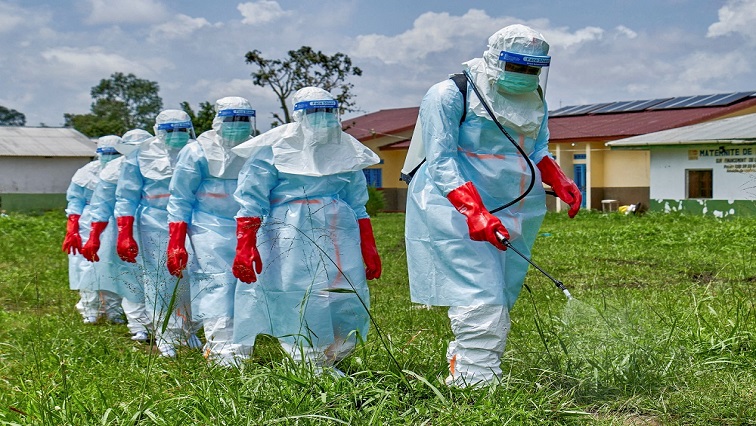
The displacement threatens public health operations because Kigonze is among the locations covered by the Ebola response.
The unexpected movement of thousands of people, combined with restricted humanitarian access, could disrupt disease surveillance and contact tracing. Essential services and other outbreak-control measures could also be affected.
The latest figures show that the number of confirmed Ebola infections has exceeded 8 000 since the outbreak began.
Health authorities have recorded 8 067 cases and 3 901 deaths, representing a fatality rate of 48.4%.
Ituri remains the centre of the outbreak. Cases have declined gradually from a peak recorded in mid-August, although transmission remains high.
In neighbouring North Kivu, infections rose to the highest level recorded in mid-September before declining during the latest reporting period.
The World Health Organisation said conflict, displacement, insecurity and limited access to essential services continued to impede the response.
The conditions have weakened surveillance, case detection, contact tracing and infection-control measures while delaying access to appropriate healthcare.
More than 1.1 million people are displaced by conflict and violence across Ituri, including over 373 000 living in displacement sites.
Mama called for the protection of civilians and safe, unrestricted humanitarian access.
The Bundibugyo Ebola outbreak is now the deadliest recorded in the DRC, surpassing the 2018-2020 emergency. It is second only to the 2014-2016 West African outbreak, which infected more than 28 600 people and killed over 11 000.
–UN/ChannelAfrica–


