

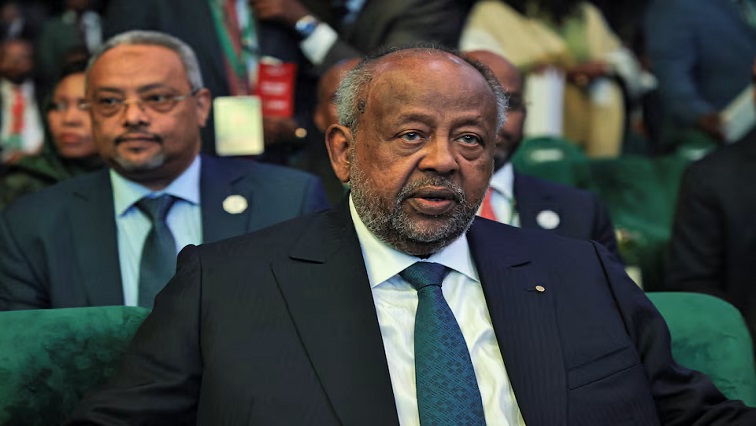
Questions are being raised about Djibouti’s political future following President Ismail Omar Guelleh’s landslide re-election, with analysts warning that the country’s stability may be too heavily tied to one individual.
Governance and elections expert Tendai Mbanje says while the result was expected, it highlights deeper concerns about the long-term health of the country’s democracy.
“Stability is important, but it should not be anchored on a single individual,” Mbanje said, cautioning that Djibouti could face uncertainty if there is no clear succession plan.
Guelleh secured 97.8% of the vote to extend his rule, but Mbanje points to a political environment that made it difficult for meaningful competition to emerge. Changes to the constitution, including the removal of the presidential age limit and stricter eligibility rules, narrowed the field of potential challengers.
“The requirements became very tough, and many potential candidates, especially those in the diaspora, were effectively excluded,” he explained.
The only opposition candidate, Mohamed Farah Samatar, came from a small party with no parliamentary representation, limiting his chances in what Mbanje described as an uneven contest.
Beyond domestic politics, Djibouti’s strategic location continues to shape how the international community responds. The country hosts military bases for global powers including the United States and China, making it a key player in global trade and security.
“Because of these geopolitical interests, major powers are likely to take a softer approach to the election outcome,” Mbanje said.
Still, he warned that relying on one leader for stability could prove risky in the long run.
“If there is no visible successor, that vacuum can create instability,” he said. “It’s a challenge not just for Djibouti, but for many countries on the continent.”
–ChannelAfrica–


